
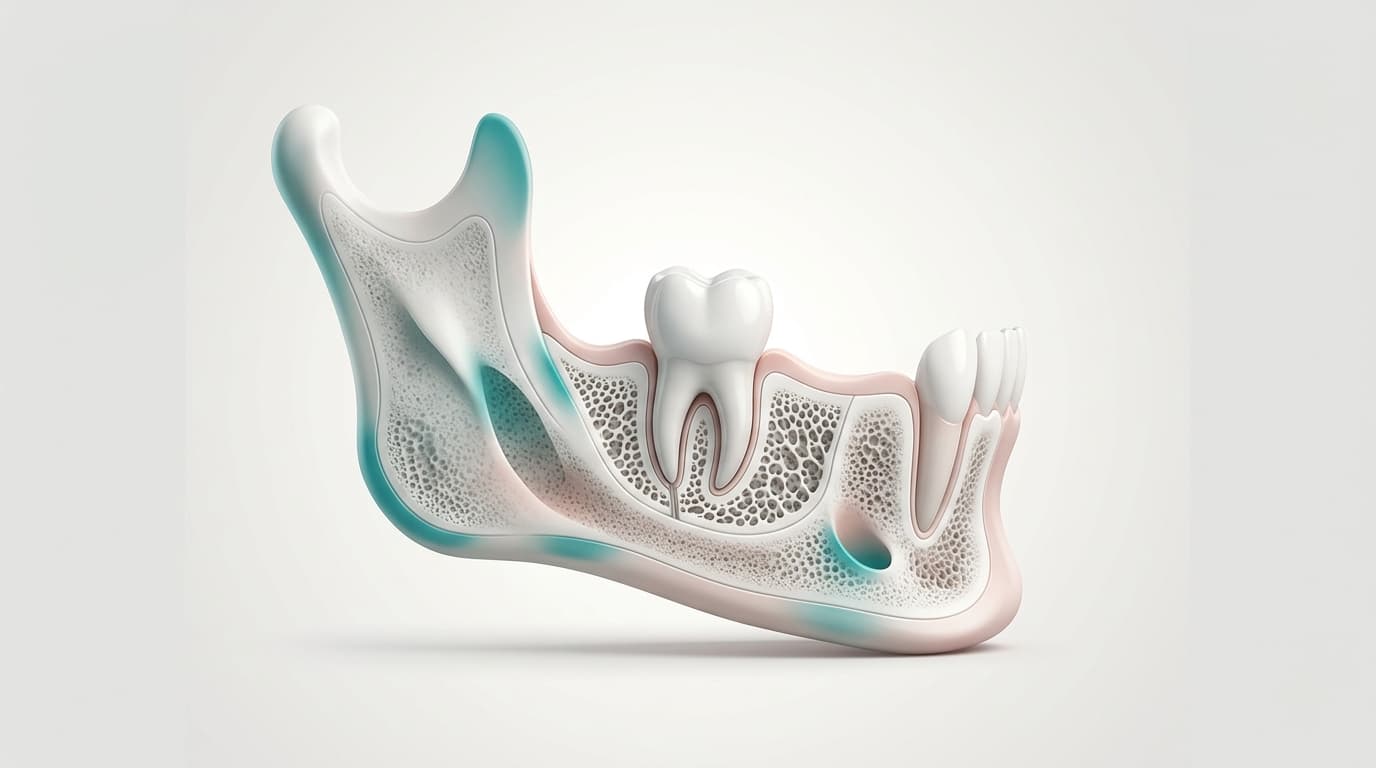
Stopping Bone Loss in the Jaw: Causes, Symptoms & Therapy
Verfasst von Dr. Christina Dickel · Zuletzt geprüft: 04/23/2026
Das Wichtigste in Kürze
- Main causes in order of frequency: Periodontitis (by far #1), tooth loss without implant replacement, advanced age, smoking, poorly controlled diabetes, bisphosphonates, and other antiresorptive drugs.
- Early detection is reliably achieved with bitewing X-rays (2D) plus Cone Beam Computed Tomography (CBCT, 3D) — measuring the distance between the cementoenamel junction and alveolar bone (CEJ-bone distance): ≤ 2 mm is physiological, > 4 mm is pathological.
- Stopping it is possible in most cases — through consistent systematic periodontitis therapy (PAR according to the 2021 G-BA guidelines) plus subsequent supportive periodontal therapy (SPT) every 3 to 6 months.
- Bone grafting (augmentative surgery) is realistic: Sinus lift (internal/external), Guided Bone Regeneration (GBR), block graft (autologous), or bone substitute material. Healing time is typically 3 to 6 months before implantation.
- Prognosis with timely intervention: With systematic periodontal therapy and regular supportive care (SPT), bone loss can be stopped in most cases; in suitable bone pockets, partial regeneration is even possible.
- Implants are usually possible even with highly advanced bone loss — following prior augmentation and careful MRONJ clarification if there is pre-existing bisphosphonate/antiresorptive therapy.
What Is Jaw Bone Loss?
The term jaw bone loss refers to any form of reduction in the bony dental alveoli and the surrounding alveolar process — the part of the jaw that supports the teeth. Lost is both the height (vertical bone dimension) and the width (bucco-oral dimension) of the alveolar ridge. The jawbone is living tissue that is constantly being remodeled: osteoclasts break down old bone matrix, osteoblasts deposit new matrix. If the osteoclasts predominate, bone mass dwindles.
Medically, we distinguish between two fundamentally different mechanisms:
- Physiological resorption. After tooth loss, the chewing pressure stimulus that normally stimulates the alveolar bone is missing. In the first six months after an extraction without replacement, the width of the jaw ridge decreases by 29 to 63 percent and its height by 11 to 22 percent (systematic review, Tan et al. 2012).
- Pathological bone loss. Here, bone is actively broken down due to disease, trauma, or medication — not just due to a lack of stimulation. The most important cause by far is periodontitis: a chronic inflammatory disease in which bacteria in the subgingival plaque stimulate the immune system to mount a destructive response against the periodontium (periodontal ligament, root cementum, alveolar bone). The resulting periodontal bone loss is the classic “silent thief” of dental health — it usually progresses painlessly and is often only noticed when considerable substance has already been lost.
Other pathological triggers include dental traumatic damage (e.g., from severe grinding/bruxism), systemic diseases like osteoporosis, and medication influences — especially bisphosphonates and denosumab in tumor or osteoporosis therapy, which in extreme cases can lead to jaw necrosis (MRONJ). We will address these causes individually in the following sections because the correct therapy depends directly on which mechanism dominates.
Key message for patients: Lost jawbone does not grow back on its own. However, once bone loss has begun, it can be stopped in almost all cases — and partially rebuilt using augmentative procedures. The earlier the diagnosis, the more favorable the prognosis; this is why knowing the early symptoms (Section 3) and risk factors (Section 2) is so important.
Causes: Why Does the Jawbone Resorb?
Jaw bone loss is rarely monocausal. In practice, we typically see an interplay of a main cause — usually periodontitis — and additional risk factors that accelerate the rate of bone loss. Below are the seven most important triggers:
- Periodontitis (#1). According to the Sixth German Oral Health Study (DMS • 6, 2025), around 14 million people in Germany have severe periodontitis requiring treatment. Bacteria in the subgingival plaque (especially Porphyromonas gingivalis, Tannerella forsythia, Aggregatibacter actinomycetemcomitans) trigger a chronic inflammatory cascade that activates osteoclasts and leads to horizontal or vertical bone loss within years. Without treatment, bone loss usually continues — how fast varies greatly from person to person.
- Tooth loss without implant restoration. As soon as a tooth is extracted or lost, the alveolar bone in the affected region loses its functional stimulus. Studies show: in the first 6 months after extraction, the bone width decreases by 29 to 63 percent (Tan et al. 2012). A bridge or removable denture slows down this atrophy only slightly — only an implant assumes load transfer to the bone and prevents the shrinkage on site.
- Smoking. Nicotine constricts blood vessels, worsening periodontal blood flow and oxygen supply to the bone. Smokers have an up to 4-fold higher risk of periodontitis and lose bone significantly faster than non-smokers when periodontitis is present. Particularly treacherous: smoking masks bleeding gums, so the disease goes undetected longer.
- Diabetes mellitus. Poorly controlled diabetes (HbA1c > 7%) considerably increases the risk of periodontitis and accelerates bone loss via Advanced Glycation Endproducts (AGEs), which damage connective tissue and impair healing. Conversely, active periodontitis worsens blood sugar control — a bidirectional vicious cycle.
- Bisphosphonates and antiresorptive agents (MRONJ risk). Medications like alendronate, zoledronate, or denosumab (for treating osteoporosis or bone metastases) inhibit osteoclasts and increase the risk of medication-related osteonecrosis of the jaw (MRONJ). Extractions, implantations, or surgical procedures in such patients require special caution — see Section 9.
- Osteoporosis. The systemic bone disease also affects the jaw, especially in women after menopause. Osteoporosis alone rarely leads to massive jaw bone loss, but it measurably exacerbates the effects of other causes (periodontitis, tooth loss). Vitamin D deficiency and low calcium intake are modifiable risk factors.
- Bruxism and occlusal trauma. Chronic teeth grinding or clenching generates massive, non-physiological forces on the periodontium. While bruxism alone rarely causes bone loss, it dramatically accelerates the progression of existing periodontitis. A bite splint worn at night reliably reduces this factor.
In addition, rarer causes exist: cystic processes (radicular or follicular cysts), tumors, radiation in the head/neck area (ORN, osteoradionecrosis), severe autoimmune diseases, and congenital jaw malformations. However, for the clear majority of patients, the seven factors mentioned dominate — and each of them is addressable with an early diagnosis.
Symptoms and Early Detection
Jaw bone loss typically progresses painlessly and is therefore often noticed late. The typical early signs are visual or functional, not painful — which makes it all the more important to recognize them. The following symptoms should alert you:
- Gum recession — teeth appear “longer”, exposed tooth necks become visible and are sensitive to cold or sweets.
- Black triangles between the teeth (interdental papilla recession), especially in the anterior region — aesthetically noticeable.
- Tooth migration — individual teeth shift or tilt, gaps form, previously stable bite contacts change.
- Tooth mobility — according to the Miller classification Class I (mild, up to 1 mm horizontal mobility), Class II (up to 2 mm), Class III (also vertically mobile).
- Loose fitting dentures that “wobble” after months or years, even though they initially fit perfectly — a classic sign of alveolar ridge atrophy.
- Bleeding gums when brushing — the most sensitive, but least specific early sign (can also be pure gingivitis without bone involvement).
- Bad breath that persists despite good oral hygiene — an indication of deep periodontal pockets with anaerobic colonization.
- Pressure pain and swelling in the area of individual teeth — signs of an acute periodontal abscess or an acutely decompensated bone pocket.
The following table helps with classification:
| Symptom | Possible Cause | Action Required |
|---|---|---|
| Teeth appear longer, tooth necks visible | Gum recession ± bone loss | Dental examination within 4 weeks; PSI screening and recession measurement. |
| Single tooth is loose (Miller I–II) | Periodontal bone loss; more rarely occlusal trauma | Appointment within 1 week; X-rays, pocket probing, possibly PAR planning. |
| Severe mobility (Miller III) | Massive bone loss, possible tooth loss imminent | Urgent within 48 hours; frequent surgical assessment (retain vs. extract). |
| Denture sits loosely after years | Physiological alveolar ridge atrophy after tooth loss | Appointment within 4 weeks; discuss relining/rebasing or implant options. |
| Pus at the gum line, fever | Periodontal abscess, acute destruction | Emergency — dental emergency service within 24 hours. |
| Black triangles in the anterior region | Interdental bone and papilla recession | Examination within 4 weeks; periodontal status and possibly regenerative therapy. |
Important: The absence of these symptoms does not mean that no bone loss is present — the majority of periodontitis patients are only reliably diagnosed via X-rays. That is why we recommend bitewing X-rays every 2 years as part of routine prophylaxis starting at age 35, and annually for high-risk patients (smokers, diabetics, familial history of periodontitis).
Diagnostic Procedures: How We Measure Bone Loss
Diagnosing jaw bone loss is a multi-step process combining clinical findings with imaging techniques. The goal: to determine the extent, pattern (horizontal vs. vertical), distribution (generalized vs. localized), and progression in order to plan the correct therapy.
1. Clinical Examination and PSI Screening. Every periodontal diagnosis begins with the Periodontal Screening Index (PSI). Using a special WHO probe, the deepest probing depth is determined in each of the six sextants (right/middle/left upper and lower jaw); each sextant is assigned a score from 0 to 4:
- PSI 0–1: healthy to mild inflammation, no pockets > 3 mm.
- PSI 2: subgingival calculus, probing depths up to 3 mm.
- PSI 3: probing depths 3.5 to 5.5 mm — suspected periodontitis, full periodontal charting indicated.
- PSI 4: probing depths > 5.5 mm — manifest periodontitis, mandatory full charting plus X-rays.
2. Full Periodontal Charting. For PSI 3/4, we systematically measure six probing depths per tooth, the clinical attachment loss (CAL), the furcation involvement (involvement of the root bifurcation in multi-rooted teeth — Class I mild, II moderate, III through-and-through) and the tooth mobility according to Miller (Class 0 to III). The bleeding index (Bleeding on Probing, BOP) indicates active inflammation.
3. Bitewing X-rays (2D). Two to four images showing the crowns and coronal sections of the posterior teeth and the crestal alveolar bone. The crucial measurement: the distance between the cementoenamel junction (CEJ) and the adjacent alveolar bone:
- ≤ 2 mm — physiological (corresponds to biological width plus normal bone structure).
- 2 to 4 mm — mild to moderate bone loss, Stage I–II according to the new periodontitis classification.
- > 4 mm — pathological, advanced bone loss, Stage III–IV, often with vertical defects.
4. Orthopantomogram (OPG, panoramic radiograph). An overview image of all teeth and both jaws in a single image, low radiation dose. Ideal for initial diagnosis, alveolar ridge assessment prior to implantation, and detecting cysts or impacted wisdom teeth. Weakness: distortions, overlapping structures, no three-dimensional information.
5. Cone Beam Computed Tomography (CBCT, 3D). Three-dimensional imaging with submillimeter resolution. Enables precise measurement of bone height, width, and quality (bone density according to Lekholm & Zarb D1–D4) — indispensable prior to implantations, complex surgical procedures, and when jaw necrosis is suspected. The radiation dose of a CBCT is significantly lower than that of a classic medical CT, but higher than an OPG; we use CBCT targetedly and only with a genuine indication.
6. Laboratory Parameters. If systemic causes are suspected (osteoporosis, diabetes, vitamin D deficiency), we add blood values: HbA1c (diabetes control), 25-OH-Vitamin D (target range 30–50 ng/ml), calcium, parathyroid hormone, and — in case of anamnestic bisphosphonate intake — exact documentation of the medication, dose, and duration.
From the combination of these findings, we establish a classification by Stage (I–IV for severity) and Grade (A–C for progression rate) according to the 2018 revised international periodontitis classification. This classification directly guides the treatment decision, which we describe in the following sections.
Can Jaw Bone Loss Be Stopped?
The short answer: Yes — in the vast majority of cases. The detailed answer depends on which cause dominates and how early intervention begins. Periodontal bone loss — by far the most common form — can be reliably stopped through systematic periodontitis therapy according to the 2021 G-BA guidelines. The therapy goals are clearly defined:
- Reduction of all probing depths to ≤ 4 mm without bleeding on probing (BOP score < 10%).
- No further radiologically detectable bone reduction during follow-up over 12 months.
- No or only minimal increase in tooth mobility.
Evidence base: The S3 guideline on the treatment of periodontitis (stages I–III, AWMF 083-043) recommends a stepwise approach of oral hygiene, subgingival instrumentation, surgery where needed and lifelong supportive care — this stabilizes the disease in most patients. In combination with regenerative procedures (enamel matrix proteins, GTR, bone substitute material), partial regeneration is even possible in suitable intraosseous defects — how much bone is regained depends strongly on the shape of the defect.
Crucial to therapy success are four factors that we explicitly address in the consultation:
- Smoking cessation. Smoking is the strongest single negative predictor — with continued tobacco use, the success rate drops measurably. We cooperate with certified smoking cessation programs organized by the Munich medical association.
- Diabetes control. An HbA1c < 7% well before the start of therapy is the goal; poorly controlled diabetes puts therapy success and bone stability at risk.
- Supportive periodontal therapy (SPT). True long-term stability is determined during the SPT phase, not in initial therapy. Intervals of 3 to 6 months depending on individual risk are standard.
- Consistent oral hygiene at home. Modified Bass technique, interdental cleaning, perhaps an electric toothbrush — without this component, biofilm and inflammation return within a few weeks.
Non-periodontal bone loss following tooth loss can also be prevented (via prompt implant restoration, ideally within 3 to 6 months after extraction) or retroactively compensated for via augmentation procedures — not reversed, but functionally balanced. In the next section, we describe the exact process of systematic PAR therapy.
PAR Therapy: How Bone Loss Is Stopped
Since July 2021, systematic periodontitis therapy follows the revised G-BA guidelines. Patients with statutory health insurance are entitled to the entire chain of services upon diagnosis (PSI 3 or 4 plus X-ray findings) — including two years of structured aftercare. The process is divided into five clearly defined stages:
- Periodontal assessment and consultation (Stage 1). Full periodontal charting (probing depths, clinical attachment loss, furcation involvement, mobility, BOP), X-ray diagnostics, and a detailed consultation on diagnosis, Stage/Grade, prognosis, and personal responsibility. Duration: 45 to 60 minutes.
- Preliminary treatment: Oral hygiene instruction (OHI) plus professional dental cleaning (Stage 2). Individualized brushing training with modified Bass technique, interdental cleaning, and adaptation of aids. The actual therapy only proceeds once good oral hygiene is documented (BOP < 20%, plaque index < 20%). Without this step, later surgical interventions are significantly less successful.
- Anti-infective therapy (“closed periodontal therapy”, Stage 3). Subgingival scaling and root planing (SRP) on all diseased teeth, usually under local anesthesia in one to two sessions of 60 to 90 minutes. Goal: complete removal of biofilm from the pockets, smoothing of the root surfaces. In selected cases, supplemented by adjuvant antibiotics (amoxicillin + metronidazole) following microbiological testing for aggressive progression.
- Reevaluation after 3 to 6 months (Stage 4). Repeat full charting. Pockets that remain ≥ 6 mm deep or bleed after anti-infective therapy are marked for the surgical phase: open flap debridement (flap surgery), supplemented in vertical bone defects by regenerative procedures — enamel matrix proteins (Emdogain), Guided Tissue Regeneration (GTR) with resorbable membrane, or autologous/xenogeneic bone grafting.
- Supportive periodontal therapy (SPT, Stage 5). Structured aftercare over 2 years, then continued as lifelong prophylaxis. Intervals based on risk profile: 3 months for high risk (smokers, poorly controlled diabetics, Stage IV), 4 to 6 months for medium risk, 6 months for low risk. Per SPT appointment: Bleeding/plaque status, re-cleaning of remaining pockets, oral hygiene coaching, and fluoride varnish if needed.
Why this structure is so effective: Bone loss is not stopped by a single procedure, but through the consistent reduction of bacterial load over years. Long-term studies show that patients with regular SPT keep their teeth considerably better than patients without aftercare.
You can find a detailed description of our PAR treatment pathway — with appointment scheduling, insurance, and private billing — on our page Periodontology in München-Bogenhausen.
Bone Grafting: What Procedures Are Available?
When bone loss is already so advanced that implant restoration is no longer possible without augmentation, or when aesthetic defects need to be leveled out, surgical bone grafting is used. The four most important procedures in direct comparison:
| Method | Indication | Healing Time | Success Rate |
|---|---|---|---|
| Internal Sinus Lift (“Osteotome Technique”) | Moderate vertical bone loss in the posterior upper jaw, residual bone height 6–9 mm. Simultaneous implantation possible. | 3 to 4 months until prosthetic restoration | around 93% implant survival after 3 years (Tan et al. 2008) |
| External Sinus Lift (“Lateral Window Approach”) | Highly advanced vertical bone loss in the posterior upper jaw, residual bone height < 5 mm. Usually a two-stage approach (first augmentation, later implant). | 6 to 9 months until implantation | around 90% implant survival after 3 years (Pjetursson et al. 2008) |
| Guided Bone Regeneration (GBR) | Horizontal (buccal/lingual) or moderate vertical defects; often simultaneously with implantation in the anterior and posterior regions. | 4 to 6 months | well documented; outcome depends on defect size |
| Autologous Block Graft (e.g., retromolar, chin) | Severe three-dimensional defects where GBR is insufficient. Gold standard for large-volume augmentation. | 4 to 6 months until implantation | well documented; outcome depends on defect size |
Augmentations are generally private services; the actual sum depends on the individual case. You will receive a binding treatment and cost plan after diagnosis.
Materials used: For GBR and sinus lifts, we typically use xenogeneic bone substitute material (bovine, e.g., deproteinized bovine bone); it has good study backing for osteoconduction and very slow resorption. Alternatively, alloplastic materials (synthetic β-tricalcium phosphate, hydroxyapatite) or autologous bone from the surgical region are used. A resorbable collagen membrane is used to fixate the bone formation; it prevents soft tissue ingrowth and gives the bone time to heal.
Pain and downtime: Sinus lifts and GBR are performed under local anesthesia, with additional sedation upon request. The first 3 days after the procedure are typically associated with slight swelling, more rarely with pain, which can be easily managed with standard analgesics (ibuprofen). Time off work is 1 to 3 days depending on the profession. Sports and physical exertion should be paused for 7 to 10 days.
Jaw Bone Loss in Old Age: What Is Normal and What Is Not?
With increasing age, jaw bone loss statistically increases — the question is what proportion is physiological (age-appropriate) and what proportion is pathological (disease-related). This distinction directly dictates the correct therapy and prognosis.
Physiological alveolar ridge atrophy. After tooth loss, bone resorption in the edentulous region progresses over decades because the functional chewing stimulus is permanently absent. In older people who have worn complete dentures for many years, we typically see a significant reduction in alveolar ridge height — up to 10 mm in the lower jaw, and even more in the upper jaw with pneumatization of the maxillary sinus. This form is not the expression of a disease, but the result of missing stimulation. At some point, dentures no longer fit, and adhesion problems and pressure sores become more frequent.
Pathological processes in seniors. Three age-associated factors significantly increase pathological jaw bone loss:
- Bisphosphonates and antiresorptive agents for treating osteoporosis — MRONJ risk with tooth extractions and implantations (see the next section).
- Poorly controlled type 2 diabetes, often with late manifestation in retirement age, accelerates periodontal bone loss.
- Reduced manual dexterity (osteoarthritis of the hands, cognitive decline), which makes oral hygiene difficult and promotes plaque accumulation.
Specific recommendations for patients aged 65 and over:
- Regular dental check-ups. At least twice a year, and every 6 months for denture wearers, including fit checks and oral mucosa inspection.
- Implants instead of or in addition to complete dentures. Two to four implants in the lower jaw (Locator-retained overdenture) or four to six implants with a fixed bridge (All-on-4) significantly improve chewing power and quality of life while locally slowing alveolar ridge atrophy. Even with advanced bone loss, modern implant systems are usually possible, possibly after augmentation.
- Nutritional optimization for bone health. Target range for Vitamin D (25-OH) 30 to 50 ng/ml — unreached by most seniors in southern Germany without supplementation. Daily calcium intake of 1,000 to 1,200 mg. Vitamin K2 for bone mineralization, especially if osteoporosis is present.
- Electric toothbrush with a large handle and pressure sensor — measurably improves oral hygiene if hand function is limited.
- Cooperation with the family doctor. Close coordination prior to starting bisphosphonate therapy or any invasive dental procedure while taking it — a simple call can prevent serious complications.
Important message: Bone loss in old age is not an unavoidable fate. Most processes can be slowed down, and many can even be stopped. Even at 75 or 80 years of age, implant restorations, PAR therapies, and augmentations can be successfully performed — provided that systemic clarification (medication, diabetes, bone metabolism) is conducted at the outset. We regularly care for patients in their 8th and 9th decades of life in our practice.
Jaw Necrosis (MRONJ) and Bisphosphonates: Managing the Risk
Medication-related osteonecrosis of the jaw (MRONJ) — formerly BRONJ (Bisphosphonate-related osteonecrosis of the jaw) — is a rare but serious complication in patients taking certain medications. This particularly affects:
- Bisphosphonates (oral: alendronate, risedronate, ibandronate for osteoporosis therapy; intravenous: zoledronate, pamidronate in tumor therapy).
- Denosumab (Prolia for osteoporosis, XGEVA for bone metastases).
- Antiangiogenic drugs like bevacizumab, sunitinib in oncology.
Pathomechanism and risk. These drugs inhibit osteoclasts and affect blood vessel growth. They accumulate in the bone — especially in the highly remodeling jawbone — and sometimes remain there for years. If a wound occurs (extraction, implantation, denture pressure sore), the bone there can no longer heal: The affected area “necrotizes”, bone is exposed and remains open. Pain, infections, fistulas, and in extreme cases, pathological jaw fractures are the consequence.
Risk classes by stage:
- Low risk: Patients on oral bisphosphonate therapy < 3 years without additional risk factors (cortisone, diabetes, smoking). Very low risk.
- Medium risk: Oral bisphosphonates ≥ 3 years or with additional risk factors; denosumab therapy for osteoporosis.
- High risk: Intravenous bisphosphonates or denosumab in oncological dosage. Considerably increased risk with invasive procedures — management according to the S3 guideline (AWMF 007-091).
Preventive workflow in our practice:
- Before starting therapy (ideal): Every patient scheduled to begin bisphosphonate or denosumab therapy is referred by their internist or oncologist for dental clearance. We treat all infectious and periodontal foci, extract teeth with a poor prognosis, and establish a prosthetically clean situation before the medication starts.
- During ongoing therapy: Invasive procedures (extraction, implantation, surgical PAR) only if strictly indicated; if necessary, after interdisciplinary consultation with the treating oncologist or internist. Antibiotic prophylaxis according to the guideline, perioperative oral hygiene protocol with 0.2% chlorhexidine, careful primary wound closure.
- Patients report in case of: exposed bone, non-healing wounds, persistent gum pain, or fistulas — any of these findings requires dental examination within 48 hours.
When MRONJ has developed: Therapy depends on the stage (0 to III according to the AAOMS classification) and ranges from conservative management (antibacterial rinses, antibiotics, gentle removal of necrosis margins) to surgical resection in a specialized clinic for oral and maxillofacial surgery. Coordinating a drug holiday with the prescribing physician is a case-by-case decision and cannot be recommended as a blanket rule.
For patients with a history of bisphosphonates: Do not shy away from visiting the dentist. Preventive care and close prophylaxis are precisely the best protection; the risk of MRONJ is always higher untreated than under medical supervision.
Diet and Lifestyle: What You Can Do Yourself
In parallel with dental therapy, bone loss can be measurably influenced by specific diet and lifestyle measures. The following five adjustments are evidence-based and achievable in almost any patient situation.
1. Vitamin D. Vitamin D is essential for intestinal calcium absorption and for bone mineralization. Target range for 25-OH-Vitamin D serum levels: 30 to 50 ng/ml (75 to 125 nmol/l). In southern Germany, very few adults reach this without supplementation — especially in winter. A typical supplementation is 1,000 to 2,000 IU (25 to 50 µg) daily; higher briefly if a deficiency is proven. Laboratory diagnostics via your family doctor are a prerequisite for sensible dosing.
2. Calcium. The official recommendation of the German Nutrition Society is 1,000 mg/day for adults, 1,200 mg for women after menopause and men over 65. Good sources: dairy products (200 ml of milk = approx. 240 mg), hard cheese (30 g Emmental = approx. 300 mg), green leafy vegetables, broccoli, almonds, calcium-rich mineral water (> 150 mg/l). Supplement only if there is a documented deficiency, as overdoses can pose cardiovascular risks.
3. Quitting smoking. Smoking is the strongest modifiable risk factor for jaw bone loss. After just 12 months of smoking abstinence, the risk of periodontitis progression approaches that of non-smokers. In Munich, we cooperate with smoking cessation courses organized by the medical association; statutory health insurance companies also cover structured programs now.
4. Diabetes control. Those who have periodontitis and type 2 diabetes at the same time should actively integrate HbA1c monitoring into their dental treatment planning. Good blood-sugar control improves the outlook of periodontal therapy, while poorly controlled diabetes accelerates bone loss. Conversely: consistent PAR therapy can lower the HbA1c value by 0.3 to 0.5 percentage points — meaning periodontitis therapy is also active diabetes therapy.
5. Vitamin K2 and other micronutrients. Vitamin K2 (menaquinone MK-7) activates osteocalcin and matrix Gla protein, thereby supporting bone mineralization. Good sources are fermented foods (natto, sauerkraut), some cheeses, and dark poultry meat. A supplement of 100 to 200 µg/day makes sense if osteoporosis or bisphosphonate therapy is present — always in consultation with your treating physician. Vitamin C (collagen cross-linking), magnesium (bone structure), and omega-3 fatty acids (inflammation modulation) complement a bone-healthy diet.
What you should avoid: Highly sugary soft drinks (acid-induced demineralization, simultaneously pro-inflammatory), excessive alcohol consumption (> 20 g/day; inhibits osteoblasts and disrupts Vitamin D function), chronic lack of sleep (increases cortisol, exacerbates bruxism), as well as highly one-sided weight-loss diets without professional guidance. In the final section, we show how we implement this prevention concretely in our practice.
Stopping Bone Loss in München-Oberföhring: Our Practice
Dr. Christina Dickel and her team care for patients from Oberföhring, Bogenhausen, Johanneskirchen, Englschalking, and the entire northeastern Munich area regarding jaw bone loss. Our approach combines modern 3D diagnostics, structured periodontitis therapy according to the 2021 G-BA guidelines, and — for augmentative procedures — a well-coordinated partnership with specialized implantologists and oral surgeons in-house and within our Munich network.
Our range of services for jaw bone loss:
- In-house CBCT diagnostics. Three-dimensional bone analysis with submillimeter resolution — indispensable prior to complex periodontal procedures, implantations, and any suspicion of jaw necrosis.
- PAR consultation with full periodontal charting, staging/grading according to international classification, individual therapy planning, and seamless aftercare beyond the 2-year SPT phase.
- Regenerative periodontal therapy with enamel matrix proteins (Emdogain), GTR membranes, and bone substitute materials for intraosseous defects — selected cases in close collaboration with our surgical partner practices.
- Cooperation for implantology and sinus lift surgery. Whether internal or external sinus lift, GBR, or block grafting — we plan bone augmentation together with the implantologist and oversee the prosthetic phase in our practice. Procedure details: Sinus lift in München-Oberföhring.
- MRONJ prevention and risk consultation for patients on bisphosphonates, denosumab, or antiangiogenic medication — preventive cleanup before starting therapy, careful workflow for invasive procedures while on medication.
- Emergency appointments for acute swellings, severe tooth mobility, or suspected MRONJ — generally within 24 hours.
Scheduling appointments and accessibility. You can reach us online via our booking system, by phone, or by email. Our practice is conveniently located just a few minutes’ walk from the U4 subway (Arabellapark); ample parking is available right at the building. We speak German and English.
What to bring to your first appointment. Your insurance card, your bonus booklet (if available), a current and complete medication list (especially relevant for bisphosphonates/denosumab), all current X-rays or prior findings, as well as information about known concomitant diseases like diabetes, osteoporosis, heart valve replacements, or blood clotting disorders. In the event of acute swelling, please give us a quick call in advance so we can schedule a same-day emergency appointment if necessary.
After the initial appointment. You will receive a personalized treatment and cost plan, written oral hygiene instructions, a clear recommendation for further diagnostics (labs, CBCT if necessary), and — if indicated — an appointment for preliminary periodontal treatment. For implant restoration after augmentation, we plan the timeline transparently: 3 to 6 months of healing after bone grafting, another 3 months of osseointegration after implantation, and finally the definitive prosthetic restoration. The entire chain of treatment remains in our hands — detailed info on Implantology in München-Bogenhausen.
Fallbeispiel
Typical course of treatment (example): bone loss in a smoker with periodontitis
Fictional example for illustration – not a real patient case.
Starting point. A smoker in his late fifties with early type 2 diabetes notices that some back teeth are becoming loose. His last dental check-up was many years ago.
Typical findings. Deep gum pockets, bleeding on probing, loose teeth and bone loss on the X-ray. Smoking and poorly controlled diabetes accelerate the progression of periodontitis.
Typical course of treatment.
- Smoking-cessation advice and coordination with the GP on diabetes control.
- Oral hygiene instruction.
- Systematic periodontal therapy according to the G-BA guideline, with adjunctive antibiotics depending on the findings.
- Re-evaluation after a few months; if deep pockets remain, surgical or regenerative procedures where appropriate.
- Supportive periodontal therapy at fixed intervals.
What to expect. The goal is to stop the bone loss and keep as many teeth as possible. Lost bone grows back only to a limited extent; severely damaged teeth can be lost despite treatment. Quitting smoking and well-controlled blood sugar improve the outlook.
Häufige Fragen
How can I stop jaw bone loss?
What are the first symptoms of bone loss in the jaw?
Can jawbone regenerate?
How much does a bone graft cost?
How is jaw bone loss diagnosed?
Can osteoporosis affect the jawbone?
Does a dental prosthesis lead to bone loss?
What happens without treatment?
How long does a bone graft take?
What role does Vitamin D play?
Is smoking a cause of jaw bone loss?
Bone loss despite good oral hygiene — how is that possible?
Can implants be placed in cases of severe bone loss?
What is a sinus lift?
How often is SPT needed after PAR therapy?
Weiterführende Themen
Verwandte Ratgeber
Artikel aus dem Blog
Behandlung in unserer Praxis
Quellen & Literatur
- AWMF S3 Guideline "Treatment of Stage I to III Periodontitis" (083-043)(abgerufen am 23.4.2026)
- DMS • 6 — Sechste Deutsche Mundgesundheitsstudie (IDZ, 2025)(abgerufen am 1.10.2026)
- Tan WL et al. — Post-extractional alveolar hard and soft tissue dimensional changes: systematic review (Clin Oral Implants Res 2012)(abgerufen am 1.10.2026)
- Pjetursson BE et al. — Sinus floor elevation (lateral window): systematic review (J Clin Periodontol 2008)(abgerufen am 1.10.2026)
- Tan WC et al. — Transalveolar sinus floor elevation: systematic review (J Clin Periodontol 2008)(abgerufen am 1.10.2026)
- Simpson TC et al. — Treatment of periodontitis for glycaemic control in people with diabetes (Cochrane 2022)(abgerufen am 1.10.2026)
- AWMF S3 Guideline "At-Home Mechanical Biofilm Management" (083-022)(abgerufen am 23.4.2026)
- DGZMK / AWMF S3 Guideline "Antiresorptive-Related Osteonecrosis of the Jaw (AR-ONJ)" (007-091)(abgerufen am 23.4.2026)
- IQWiG / Gesundheitsinformation.de — Periodontitis(abgerufen am 23.4.2026)
- G-BA — Guideline on the Systematic Treatment of Periodontitis (PAR Guideline)(abgerufen am 23.4.2026)