
Wir verwenden Cookies

Diese Website nutzt Google Analytics, um die Nutzung zu analysieren und unser Angebot zu verbessern. Ihre Zustimmung ist freiwillig und kann jederzeit widerrufen werden.

DGI-zertifizierte ImplantologinÜber 95% Erfolgsrate13+ Jahre Erfahrung

Dental Surgery Munich | Dentist Christina Dickel

Modern dental surgery includes all surgical procedures in the oral cavity - gentle, precise and low-pain.

What Is Dental Surgery?

Dental surgery (oral surgery) encompasses all operative procedures in the oral cavity, jaw, and adjacent soft tissues. It goes far beyond simple tooth extraction and includes a broad spectrum of procedures — from wisdom tooth removal and apicoectomy to gingival recession repair and tooth transplantation.

Surgical interventions become necessary when conservative measures reach their limits: a severely damaged tooth that can no longer be saved with a filling or crown, an impacted wisdom tooth that endangers neighboring teeth, a chronic infection at the root tip that does not heal despite root canal treatment, or receding gums that expose tooth roots. In all these cases, a surgical procedure is often the only way to eliminate pain, prevent further damage, and ensure long-term oral health.

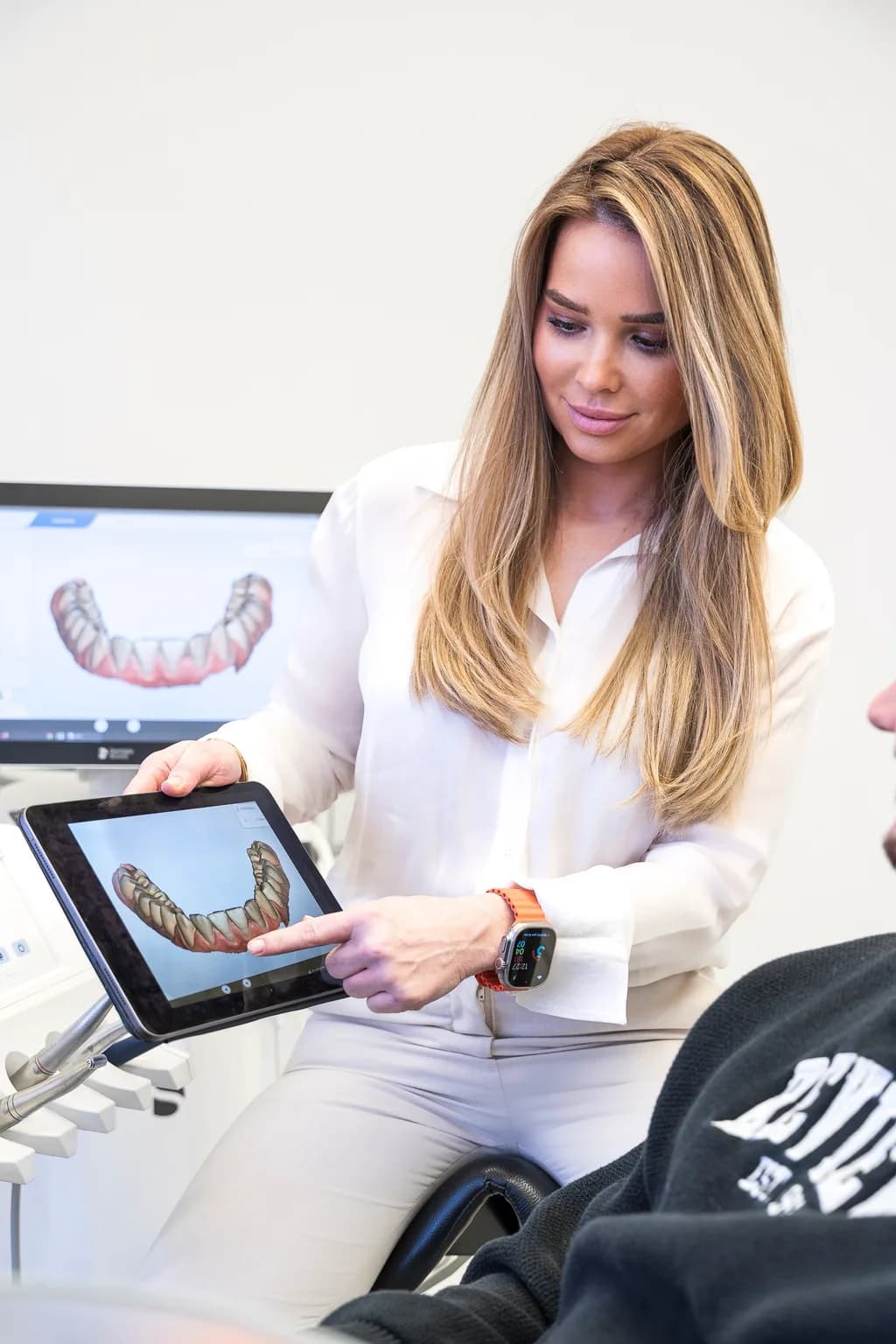
The foundation of every surgical procedure in our practice is CBCT 3D diagnostics (Cone Beam Computed Tomography). Unlike conventional two-dimensional X-rays, CBCT provides three-dimensional images of the jaw, teeth, and surrounding structures — with sub-millimeter resolution. This allows us to assess the exact location of nerve pathways, roots, and bone structures before the procedure and plan the intervention precisely. The result: shorter operating times, fewer complications, and faster healing.

In our practice, we cover the entire spectrum of dental surgery — from routine extractions to complex reconstructive procedures. We place special emphasis on minimally invasive techniques that protect tissue, and on comprehensive sedation options for anxious patients: nitrous oxide, twilight sedation, or general anesthesia — so that even extensive procedures are stress-free and pain-free.

Zahnärztliche Chirurgie: Moderner OP-Bereich für oralchirurgische Eingriffe
Unser chirurgischer Behandlungsraum: Modernste Ausstattung für sichere oralchirurgische Eingriffe.

Wisdom Tooth Removal

Wisdom tooth removal is the most common oral surgical procedure overall. Wisdom teeth (third molars) typically emerge between the ages of 17 and 25 — but most people do not have enough space in their jaw for them. The consequence: the teeth remain fully or partially trapped in the bone (retention or impaction), grow at an angle or are displaced, and can cause significant problems.

Weisheitszahnentfernung: Verlagerte und impaktierte Weisheitszähne im Querschnitt
Weisheitszahnentfernung: Verschiedene Lagerungstypen und chirurgische Zugangswege.

When Do Wisdom Teeth Need to Be Removed?

Not every wisdom tooth needs to be removed. However, removal is indicated when:

  • Lack of space (retention/impaction): The wisdom tooth does not have enough room to fully erupt. It remains trapped in the bone or beneath the gum and can exert pressure on neighboring teeth, leading to tooth displacement and crowding.
  • Recurrent inflammation (pericoronitis): With partially erupted wisdom teeth, a gum flap often forms over the chewing surface where bacteria accumulate. The result is painful, recurrent inflammation of the surrounding soft tissue.
  • Cavities and damage to neighboring teeth: Displaced wisdom teeth are difficult to clean and frequently develop cavities. Particularly problematic: the contact pressure can also damage the adjacent second molar — potentially causing root resorption.
  • Cyst formation: A follicular cyst can form around the tooth germ of an unerupted wisdom tooth, destroying the jawbone.
  • Orthodontic indication: Before or after orthodontic treatment, to prevent renewed crowding of the teeth.

Partially Retained vs. Fully Impacted

The complexity of wisdom tooth removal depends significantly on the position of the tooth:

Partially retained wisdom teeth have already partially broken through the gum. They are usually easier to remove surgically but more frequently cause inflammation, as the gum flap serves as an entry point for bacteria.

Fully impacted wisdom teeth lie completely hidden within the jawbone and require a more extensive surgical approach. The gum is folded back, bone is removed if necessary (osteotomy), and in some cases the tooth is divided (tooth sectioning/odontosection) to remove it gently and in pieces.

CBCT planning is essential: Particularly with lower jaw wisdom teeth, the inferior alveolar nerve is frequently located in close proximity to the root tips. This nerve provides sensation to the lower lip and chin. Using CBCT 3D diagnostics, we can determine the exact course of the nerve in relation to the roots and plan the procedure to minimize the risk of nerve damage.

All Four Wisdom Teeth at Once?

Whether all four wisdom teeth are removed in one session or in two separate procedures depends on the complexity and your preferences. For uncomplicated findings and under twilight sedation or general anesthesia, removing all four teeth in one session is possible and advisable — you only have one healing phase instead of two. For complicated positions or if you prefer the procedure under local anesthesia, we often recommend a side-by-side approach (first the right side, then the left, or vice versa), so you can at least chew on one side during healing.

Surgical Tooth Extraction & Apicoectomy

Not every tooth can simply be pulled with forceps. When teeth are deeply damaged, fractured, or fused with the bone, a surgical tooth extraction (osteotomy) is required. The gum is folded back, bone is removed if necessary, and the tooth is extracted under direct vision — gently and in a controlled manner.

Wurzelspitzenresektion: Chirurgische Entfernung der Wurzelspitze im Querschnitt
Wurzelspitzenresektion (Apikoektomie): Entfernung der entzündeten Wurzelspitze zur Zahnerhaltung.

Surgical Tooth Extraction

Typical indications for a surgical tooth extraction include:

  • Deeply fractured teeth: When the tooth crown has broken off and the root remains in the bone, a simple extraction can no longer be performed.
  • Root remnants after failed extraction: Broken root tips that remain in the bone must be surgically removed.
  • Ankylosed (fused) teeth: Teeth that have fused with the jawbone and cannot be loosened.
  • Supernumerary teeth: Additional teeth that are embedded in the bone and obstruct other teeth.

During surgical tooth extraction, we use piezosurgery whenever possible — an ultrasound-based technique that cuts bone precisely while preserving soft tissue (nerves, gums, mucosa). The result: less swelling, less pain, and faster healing.

After extraction, a bone graft (socket preservation) is often advisable to preserve the jawbone for a future implant and minimize bone loss after removal.

Apicoectomy (Root End Resection)

An apicoectomy is a tooth-preserving surgical procedure in which the inflamed root tip and surrounding diseased tissue are removed. It is used when a chronic infection at the root tip (apical periodontitis) does not heal despite root canal treatment, or when a revision of the root canal treatment is not possible.

Indications for an apicoectomy:

  • Persistent periapical lesion (granuloma or cyst at the root tip) despite adequate root canal treatment
  • Root canal instrument fractured in the canal making revision impossible
  • Anatomically complex root canal configurations (severe curvature, canal branches) that prevent complete preparation
  • Post-and-core restored teeth where revision would destroy the post and thus the crown

Procedure of an apicoectomy: After local anesthesia, the gum over the affected root tip is folded back. The inflamed root tip is removed together with the diseased tissue (approximately 3 mm). The root canal is then sealed from the tip with a biocompatible material (e.g., MTA — Mineral Trioxide Aggregate) to create a tight retrograde filling. The mucosal flap is sutured, and the bone regenerates over the following months. The procedure typically takes 30-60 minutes per tooth.

The apicoectomy has a success rate of approximately 85-95% and is often the last option to save a tooth before extraction and a dental implant become necessary.

Gingival Recession Repair

Gum recession (gingival recession) is a widespread problem that is not only aesthetically displeasing but can also lead to sensitivity, root caries, and further tissue loss. In recession repair, the receded gum tissue is rebuilt using microsurgical techniques and guided back over the exposed tooth root.

Rezessionsdeckung: Behandlung von Zahnfleischrückgang mit Bindegewebstransplantat
Rezessionsdeckung: Wiederherstellung des Zahnfleischsaums durch mikrochirurgische Techniken.

Causes of Gum Recession

The causes of gum recession are varied:

  • Aggressive tooth brushing: Hard toothbrushes and horizontal scrubbing motions with too much pressure are the most common cause of recession — especially on the outer surfaces of canines and premolars.
  • Periodontitis: Chronic bacterial gum inflammation destroys the gums and underlying jawbone, leading to significant gum recession.
  • Thin biotype: Some people naturally have very thin, delicate gum tissue that is more susceptible to recession than thicker, more robust tissue.
  • Malocclusion and malpositioning: Teeth that are positioned outside the dental arch often have a thin bony wall on the outer side, which promotes recession.
  • Piercing: Lip or tongue piercings can cause recession through mechanical friction against the gums.

Treatment Techniques

Several proven microsurgical techniques are available for recession repair:

Tunnel technique: A particularly gentle and minimally invasive method in which the gum is not cut open but undermined in a tunnel shape. A connective tissue graft (harvested from the palate) or a collagen matrix is inserted through this tunnel and positioned over the exposed root. Advantage: no visible incisions, faster healing, excellent aesthetic results.

Connective tissue graft (CTG): Considered the gold standard in recession repair. A piece of connective tissue is harvested from the palate and transplanted beneath the existing gum over the exposed root. The graft integrates and permanently thickens the gum — both in height and in thickness.

Guided tissue regeneration (GTR): For pronounced recessions with bone loss, a collagen membrane and/or enamel matrix proteins (Emdogain) can be used to specifically guide the regeneration of gum tissue, bone, and root cementum.

When Should Recession Repair Be Performed?

As a general rule: the earlier a recession is treated, the better the results. Recession repair is advisable for:

  • Aesthetic concerns: Visible long tooth necks in the front tooth area disturb many patients considerably.
  • Hypersensitivity: Exposed tooth necks often react painfully to cold, heat, and sweet foods.
  • Root caries risk: The exposed root surface is softer than tooth enamel and significantly more susceptible to caries.
  • Progressive tissue loss: Without treatment, the recession can continue to progress and ultimately compromise tooth stability.

Important: Before recession repair, the underlying cause must be eliminated. For aggressive brushing, brushing techniques are modified; for periodontitis, the inflammation must first be brought under control.

Tooth Transplantation

Tooth transplantation (autotransplantation) is a fascinating and often underestimated procedure: one of your own teeth — usually a wisdom tooth — is removed from its original position and transplanted into a tooth gap. Ideally, the transplanted tooth integrates, develops a new periodontal ligament system, and functions like a natural tooth — with its own tactile sense, natural cushioning, and lifelong biological integration.

Zahntransplantation: Verpflanzung eines eigenen Zahns als natürliche Implantat-Alternative
Zahntransplantation: Ein eigener Zahn wird in die Lücke verpflanzt — die natürlichste Alternative zum Implantat.

A Natural Alternative to an Implant

Unlike a dental implant, which is made of titanium or ceramic and rigidly anchored in the bone (osseointegration), a transplanted tooth retains its natural periodontal ligament (PDL) — the fibers that elastically suspend the tooth in the bone. This offers crucial advantages:

  • Natural sensation: The transplanted tooth has tactile feedback (proprioception) — you can feel how much force you are applying when chewing. An implant does not have this sensation.
  • Biological adaptation: The tooth can move slightly and adapts to natural changes — ideal for young patients whose jaws are still growing.
  • Bone preservation: The periodontal ligament stimulates the jawbone and prevents the bone loss that is typical with tooth gaps.
  • No foreign materials: Since it involves your own tissue, there are no rejection reactions and no peri-implantitis.

Indications and Prerequisites

Tooth transplantation is an option in certain situations:

  • First molar not salvageable, wisdom tooth available: The most common case — a destroyed or fractured first molar is removed and replaced with a healthy wisdom tooth.
  • Young patient with tooth loss: In adolescents and young adults whose jaws are still growing, an implant is contraindicated. Tooth transplantation bridges this phase biologically.
  • Tooth loss due to trauma: After an accident with tooth loss, a wisdom tooth can be transplanted as a replacement.
  • Premolar transplantation for orthodontic crowding: Surplus premolars can be transplanted into gaps at other locations.

Prerequisites: The donor tooth must be of suitable size and shape to fit the recipient site. Ideally, the root development of the donor tooth is not yet fully complete (2/3 to 3/4 root length), as the chances of successful integration are particularly high then. However, teeth with fully developed roots can also be successfully transplanted.

Success Rates and Long-Term Prognosis

The success rate of tooth transplantation is 80-95%, depending on age, root development, and initial situation. In young patients with still-open root tips, results are particularly good — the transplanted tooth can even continue to gain root length and remain vital (without root canal treatment). For teeth with completed root growth, root canal treatment after transplantation is usually necessary.

Studies show that successfully transplanted teeth can function for decades — with a natural appearance, normal chewing sensation, and healthy periodontal attachment. CBCT-based 3D planning plays a central role here as well: we can digitally compare the size ratios of the donor tooth and recipient site in advance and plan the procedure precisely.

Process: From Diagnostics to Aftercare

Every surgical procedure in our practice follows a structured process — from precise diagnostics through individualized treatment planning to close aftercare. This ensures that every procedure is safe, predictable, and as comfortable as possible for you.

DVT 3D-Diagnostik für präzise Planung chirurgischer Eingriffe
Digitale Volumentomographie (DVT): Millimetergenaue 3D-Planung für sichere chirurgische Eingriffe.

1. CBCT Diagnostics and Assessment

It all begins with a thorough clinical examination and — for most surgical procedures — a CBCT scan (Cone Beam Computed Tomography). The three-dimensional imaging provides us with a detailed picture of the bone and tooth structures, nerve pathways, and soft tissues. On this basis, we can plan the procedure down to the millimeter and identify potential risks in advance.

Examples: For wisdom teeth, the CBCT shows the exact relationship of the roots to the inferior alveolar nerve. For an apicoectomy, we can see the extent of the periapical lesion in all three planes. For tooth transplantation, we can check in advance whether the donor tooth fits the recipient site.

2. Individualized Treatment Planning

Based on the diagnostic data, we create an individualized treatment plan, which we discuss with you in a detailed consultation. You will learn exactly what happens during the procedure, what alternatives exist, what costs to expect, and what the healing process looks like. We prepare a cost estimate for your insurance and answer all your questions — transparently and without time pressure.

3. Anesthesia and Sedation Options

Every surgical procedure is performed under at least local anesthesia — you are completely pain-free during the operation. In addition, we offer graduated sedation options for anxious patients and extensive procedures:

  • Nitrous oxide sedation: Gentle relaxation through inhalation of nitrous oxide via a nasal mask. You remain fully conscious but feel relaxed and anxiety-free. Ideal for minor procedures and patients with mild dental anxiety.
  • Twilight sedation: A sedative is administered through an IV line. You drift into a sleep-like state but remain responsive. You will have little or no memory of the procedure afterward. Ideal for wisdom tooth surgery and medium procedures.
  • General anesthesia: On our anesthesia days, the anesthesia is administered by an experienced specialist anesthesiologist. You sleep throughout the entire procedure and only wake up when everything is over. Ideal for extensive procedures (e.g., removal of all four wisdom teeth), severe dental anxiety, or the desire for complete unconsciousness.

4. The Surgical Procedure

The procedure itself is performed according to the previously discussed plan. We work with modern surgical instruments, including piezosurgery and the finest suture material, to treat the tissue as gently as possible. The operating time varies depending on the procedure: a simple wisdom tooth removal takes approximately 15-30 minutes, an apicoectomy approximately 30-60 minutes, a recession repair approximately 60-90 minutes, and a tooth transplantation approximately 60-120 minutes.

5. Aftercare and Healing Process

Careful aftercare is crucial for successful healing. After the procedure, you will receive a detailed aftercare plan with all important behavioral guidelines:

  • First 24-48 hours: Cool from the outside (10 minutes cooling, 10 minutes pause), soft foods, physical rest, sleep with your upper body slightly elevated. Take pain medication as prescribed — ideally before the anesthesia wears off.
  • First week: Swelling peaks on days 2-3 and then subsides. No sports, no smoking, no alcohol, chlorhexidine mouth rinse as directed.
  • Suture removal: After approximately 7-10 days at the practice.
  • Follow-up appointments: Regular follow-up checks to assess wound healing. For apicoectomies and tooth transplantations, X-ray checks are performed at 3, 6, and 12 months.

Emergency contact: In case of severe pain, post-operative bleeding, fever, or other abnormalities, we are available for you even outside office hours.

Costs and Insurance Coverage

The cost structure in dental surgery is varied — some procedures are covered by statutory health insurance, while others are private services. Here is an overview of cost coverage for the most important procedures:

Statutory Health Insurance (GKV)

The GKV covers the following surgical procedures as part of contractual dental care:

  • Wisdom tooth removal: Fully covered by the GKV when there is a medical indication (lack of space, inflammation, damage to neighboring teeth). Out-of-pocket costs only apply to optional services such as sedation or bone graft material.
  • Surgical tooth extractions: Also covered by insurance when the tooth must be removed for medical reasons.
  • Apicoectomy (WSR): Generally covered by insurance — the GKV covers the surgical procedure. However, premium techniques such as retrograde filling with MTA, microsurgical instruments, or CBCT planning are not covered. These additional services are billed according to the GOZ (German fee schedule for dentists).

Not covered by the GKV:

  • Recession repair: Purely private service — treatment of gum recession is not included in the GKV service catalog.
  • Tooth transplantation: Also a purely private service, as it is a specialized procedure not included in the GKV service catalog.
  • Sedation and anesthesia: Nitrous oxide, twilight sedation, and general anesthesia are generally private services — with exceptions for certain indications (e.g., very young children, disability, documented dental phobia).

Private Health Insurance (PKV)

Private insurers reimburse surgical procedures depending on the plan — often more comprehensively than the GKV. Many PKV plans also cover recession repair, tooth transplantation, and sedation costs. However, reimbursement varies greatly depending on the insurance contract. We recommend submitting a treatment and cost plan to your PKV before the procedure. We will of course prepare this for you.

Installment Payment and Financing

For procedures with out-of-pocket costs or purely private services, we offer flexible installment payment plans. Optimal treatment should not fail due to financing — please ask us about this during the consultation.

Why Dr. Dickel for Your Dental Surgery?

Oral surgical procedures require experience, precision, and state-of-the-art equipment. In our practice in Munich-Oberfoehring, we combine all the prerequisites for safe and gentle surgical procedures:

  • CBCT 3D diagnostics in the practice: Millimeter-precise three-dimensional planning of every surgical procedure — whether wisdom tooth surgery, apicoectomy, or tooth transplantation. No guesswork, no referrals for imaging.
  • DGI member: As a member of the German Society for Implantology (DGI), we have well-founded surgical expertise that is regularly updated through continuing education.
  • Complete surgical spectrum: From wisdom tooth removal to apicoectomy, recession repair, tooth transplantation, and sinus lift — you receive all surgical services under one roof, without referrals to external practices.
  • Seamless integration with implantology and bone augmentation: When an implant is planned after a tooth extraction, we perform all steps — extraction, socket preservation, bone augmentation, implant placement, and prosthetic restoration.
  • Three sedation levels for anxious patients: Nitrous oxide, twilight sedation, and general anesthesia on anesthesia days with a specialist anesthesiologist — the right solution for every patient and every level of anxiety. No patient has to be afraid of the procedure.
  • Minimally invasive techniques: Piezosurgery, microsurgical instruments, and the finest suture material for tissue-preserving procedures with faster healing.
  • CEREC immediate restoration: When dental restoration is needed after a surgical procedure, we fabricate crowns digitally and often in a single session — precise, tooth-colored, and long-lasting.

Schedule a no-obligation consultation. We take time for your questions, provide comprehensive diagnostics, and honestly advise you on the best treatment option for your individual situation.

Kosten im Überblick

Wisdom tooth removal (per tooth)

150-400 EUR

Out-of-pocket share for GKV patients for complex findings (CBCT diagnostics, sedation). The surgical procedure itself is covered by insurance when medically indicated.

Apicoectomy

300-800 EUR

Co-payment for modern microsurgical techniques, retrograde MTA filling, and CBCT planning. The basic surgical procedure is covered by insurance.

Recession repair (per tooth)

400-1,200 EUR

Purely private service. Costs depend on technique (tunnel technique, connective tissue graft), number of teeth, and extent of recession.

The GKV fully covers surgical wisdom tooth removal and simple surgical extractions. The apicoectomy is generally covered by insurance; modern additional techniques (microsurgical, retrograde filling) are billed privately as premium costs. Recession repair and tooth transplantation are not covered by insurance.

Private health insurers reimburse surgical procedures depending on the plan — often more comprehensively than the GKV. Many plans also cover recession repair, tooth transplantation, and sedation costs. We will prepare a detailed treatment and cost plan for you to submit to your PKV in advance.

For private services and out-of-pocket costs, we offer flexible installment payment plans. Optimal treatment should not fail due to financing — please ask us about this during the consultation.

Risiken und Sicherheit

Dental surgical procedures are among the most frequently performed operations overall and are very safe when carefully planned and executed. As with any surgical procedure, complications can occur, but they are usually manageable and temporary.

Post-operative bleeding

Occasional

Light post-operative bleeding in the first 24 hours is normal. Bite on a sterile gauze pad, physical rest, no sports, elevate upper body. Contact the practice immediately if persistent heavy bleeding occurs.

Swelling

Common (normal healing response)

Consistent cooling in the first 48 hours, elevate upper body, anti-inflammatory medication. The swelling peaks on days 2-3 and subsides within 5-7 days.

Infection

Rare (< 3%)

Prophylactic antibiotic administration if needed, sterile operating conditions, smoking cessation, antiseptic mouth rinse (chlorhexidine). Immediate contact and treatment if signs of infection (fever, severe pain, pus) appear.

Nerve damage (inferior alveolar nerve with lower jaw wisdom teeth)

Temporary in 1-5%, permanent < 1%

CBCT 3D planning for exact determination of nerve course before the procedure. Adapted surgical technique (e.g., coronectomy for roots very close to the nerve). Temporary numbness in the lower lip/chin typically resolves completely within weeks to months.

Wound healing disturbance

Occasional (2-5%)

Dry socket (alveolar osteitis) occurs most frequently after lower jaw tooth extractions. Risk factors: smoking, oral contraceptives, poor oral hygiene. Treatment through medicated dressing at the practice — usually provides rapid relief.

In our practice, we minimize risks through precise CBCT-based 3D planning of every procedure, the use of piezosurgery (gentle ultrasound-based bone preparation), microsurgical instruments for tissue-preserving work, sterile operating protocols, and close aftercare follow-ups. For anxious patients, three sedation levels (nitrous oxide, twilight sedation, general anesthesia) are available for a stress-free procedure.

Häufige Fragen

During the procedure, you will not feel any pain thanks to the local anesthesia — only pressure sensations are possible. After the procedure, pain may occur for 2-5 days, which can be well controlled with pain medication (ibuprofen 400-600 mg). Most patients report significantly less pain than expected. Upon request, we perform the procedure under nitrous oxide, twilight sedation, or general anesthesia.
For an uncomplicated wisdom tooth removal, you should plan for 2-3 days; for removal of all four wisdom teeth or complicated findings, rather 4-7 days. Physically strenuous activities should be avoided for at least one week. We will of course provide you with a sick leave certificate.
Consistent external cooling is most effective: apply a cold pack or ice wrapped in a cloth for 10 minutes at a time, then 10 minutes pause — especially in the first 24-48 hours. Additionally: elevate your upper body while sleeping, physical rest, soft foods. Ibuprofen works simultaneously as a pain reliever and anti-inflammatory. The swelling peaks on days 2-3 and then noticeably subsides.
Surgical wisdom tooth removal is generally covered by the GKV when there is a medical indication. Out-of-pocket costs only arise for additional services such as CBCT diagnostics (for complex findings), sedation (nitrous oxide, twilight sedation, general anesthesia), or bone graft material. The out-of-pocket share is approximately 150-400 EUR per tooth depending on the complexity. Privately insured patients usually receive full reimbursement.
An apicoectomy (root end resection) involves surgically removing the inflamed tip of a tooth root and sealing the canal from the tip. It is necessary when a chronic infection (granuloma or cyst) at the root tip does not heal despite root canal treatment, or when a revision of the root canal treatment is technically not possible. The apicoectomy is often the last chance to save the tooth.
Yes, through recession repair, receded gum tissue can be rebuilt. Using microsurgical techniques (tunnel technique, connective tissue graft), the exposed tooth root is covered with gum tissue again. The success rate is 70-100% root coverage depending on the initial findings. A prerequisite is that the cause of the recession (e.g., incorrect brushing technique, periodontitis) is eliminated.
No, recession repair is a purely private service and is not covered by statutory health insurance (GKV). Costs range from approximately 400-1,200 EUR per tooth depending on the technique and extent. Private health insurers often reimburse the costs — this depends on the specific plan. We will provide you with a detailed cost estimate in advance.
In tooth transplantation, one of your own teeth (usually a wisdom tooth) is removed from its position and transplanted into a tooth gap at another location. It is particularly suitable for young patients for whom an implant is not yet possible, or when a first molar cannot be saved and a suitable wisdom tooth is available. The advantage: the transplanted tooth has a natural periodontal ligament, tactile sensation, and biological integration — qualities that no implant can offer.
Yes, on our anesthesia days we perform wisdom tooth removals and other surgical procedures under general anesthesia. An experienced specialist anesthesiologist looks after you directly in our practice. General anesthesia is particularly suitable when all four wisdom teeth are to be removed at once, for complex findings, or for severe dental anxiety. Alternatively, we also offer nitrous oxide sedation and twilight sedation.
Initial wound healing (swelling, discomfort) takes approximately 5-7 days, suture removal occurs after approximately 7-10 days. The bone around the resected root tip requires 3-6 months to fully heal and regenerate. X-ray checks at 3, 6, and 12 months show the progress of bone healing. In most cases, you can return to work after 2-3 days.
With lower jaw wisdom teeth, the inferior alveolar nerve is frequently located near the root tips. Irritation or damage to this nerve can lead to numbness in the lower lip and chin. Thanks to CBCT 3D diagnostics, we can determine the exact nerve course before the procedure and adapt the surgical technique accordingly. Temporary sensory disturbances occur in approximately 1-5% of cases; permanent nerve damage is very rare (under 1%).
Before the procedure, you should: eat normally (except for general anesthesia — fasting from 6 hours before the procedure), possibly pause blood-thinning medications after consultation with us and your family doctor, not smoke (ideally 2 days before), and arrange for someone to accompany you if sedation or general anesthesia is planned (you are not allowed to drive yourself afterward). Inform us about all medications, allergies, and pre-existing conditions.

Qualifikationen und Zertifikate

DGI — German Society for Implantology

Membership

DGZMK — German Society for Dental, Oral and Maxillofacial Medicine

Membership

DGAEZ — German Society for Aesthetic Dentistry

Membership

CEREC Certification — Digital CAD/CAM Dental Restoration

Certified

CBCT 3D Diagnostics — Cone Beam Computed Tomography

Practice Equipment

Sedation Options — Nitrous Oxide, Twilight Sedation, General Anesthesia

Anesthesia days with specialist anesthesiologist

Bereit für Ihr strahlendes Lächeln?

Vereinbaren Sie jetzt Ihr kostenloses Beratungsgespräch. Wir freuen uns auf Sie.

Verwandte Leistungen

Ready for your
Dental Surgery?

Schedule your consultation appointment today and let our expertise convince you. We look forward to helping you achieve a healthy and radiant smile.

Treatment Overview:

Treatment Duration:
Sessions:
Investment:
Specialist: Dentist Dickel

Contact & Directions

Dental Practice Christina Dickel
Oberföhringer Straße 183a, 81925 München

Opening Hours

Mon:08:00-19:00
Tue:08:00-19:00
Wed:08:00-19:00
Thu:08:00-19:00
Fri:08:00-13:00
13+
Years Experience
4.9
★★★★★ Rating
100%
Satisfaction

Wisdom Tooth Removal

Wisdom tooth removal is the most common oral surgical procedure overall. Wisdom teeth (third molars) typically emerge between the ages of 17 and 25 — but most people do not have enough space in their jaw for them. The consequence: the teeth remain fully or partially trapped in the bone (retention or impaction), grow at an angle or are displaced, and can cause significant problems.

When Do Wisdom Teeth Need to Be Removed?

Not every wisdom tooth needs to be removed. However, removal is indicated when:

  • Lack of space (retention/impaction): The wisdom tooth does not have enough room to fully erupt. It remains trapped in the bone or beneath the gum and can exert pressure on neighboring teeth, leading to tooth displacement and crowding.
  • Recurrent inflammation (pericoronitis): With partially erupted wisdom teeth, a gum flap often forms over the chewing surface where bacteria accumulate. The result is painful, recurrent inflammation of the surrounding soft tissue.
  • Cavities and damage to neighboring teeth: Displaced wisdom teeth are difficult to clean and frequently develop cavities. Particularly problematic: the contact pressure can also damage the adjacent second molar — potentially causing root resorption.
  • Cyst formation: A follicular cyst can form around the tooth germ of an unerupted wisdom tooth, destroying the jawbone.
  • Orthodontic indication: Before or after orthodontic treatment, to prevent renewed crowding of the teeth.

Partially Retained vs. Fully Impacted

The complexity of wisdom tooth removal depends significantly on the position of the tooth:

Partially retained wisdom teeth have already partially broken through the gum. They are usually easier to remove surgically but more frequently cause inflammation, as the gum flap serves as an entry point for bacteria.

Fully impacted wisdom teeth lie completely hidden within the jawbone and require a more extensive surgical approach. The gum is folded back, bone is removed if necessary (osteotomy), and in some cases the tooth is divided (tooth sectioning/odontosection) to remove it gently and in pieces.

CBCT planning is essential: Particularly with lower jaw wisdom teeth, the inferior alveolar nerve is frequently located in close proximity to the root tips. This nerve provides sensation to the lower lip and chin. Using CBCT 3D diagnostics, we can determine the exact course of the nerve in relation to the roots and plan the procedure to minimize the risk of nerve damage.

All Four Wisdom Teeth at Once?

Whether all four wisdom teeth are removed in one session or in two separate procedures depends on the complexity and your preferences. For uncomplicated findings and under twilight sedation or general anesthesia, removing all four teeth in one session is possible and advisable — you only have one healing phase instead of two. For complicated positions or if you prefer the procedure under local anesthesia, we often recommend a side-by-side approach (first the right side, then the left, or vice versa), so you can at least chew on one side during healing.

Surgical Tooth Extraction & Apicoectomy

Not every tooth can simply be pulled with forceps. When teeth are deeply damaged, fractured, or fused with the bone, a surgical tooth extraction (osteotomy) is required. The gum is folded back, bone is removed if necessary, and the tooth is extracted under direct vision — gently and in a controlled manner.

Surgical Tooth Extraction

Typical indications for a surgical tooth extraction include:

  • Deeply fractured teeth: When the tooth crown has broken off and the root remains in the bone, a simple extraction can no longer be performed.
  • Root remnants after failed extraction: Broken root tips that remain in the bone must be surgically removed.
  • Ankylosed (fused) teeth: Teeth that have fused with the jawbone and cannot be loosened.
  • Supernumerary teeth: Additional teeth that are embedded in the bone and obstruct other teeth.

During surgical tooth extraction, we use piezosurgery whenever possible — an ultrasound-based technique that cuts bone precisely while preserving soft tissue (nerves, gums, mucosa). The result: less swelling, less pain, and faster healing.

After extraction, a bone graft (socket preservation) is often advisable to preserve the jawbone for a future implant and minimize bone loss after removal.

Apicoectomy (Root End Resection)

An apicoectomy is a tooth-preserving surgical procedure in which the inflamed root tip and surrounding diseased tissue are removed. It is used when a chronic infection at the root tip (apical periodontitis) does not heal despite root canal treatment, or when a revision of the root canal treatment is not possible.

Indications for an apicoectomy:

  • Persistent periapical lesion (granuloma or cyst at the root tip) despite adequate root canal treatment
  • Root canal instrument fractured in the canal making revision impossible
  • Anatomically complex root canal configurations (severe curvature, canal branches) that prevent complete preparation
  • Post-and-core restored teeth where revision would destroy the post and thus the crown

Procedure of an apicoectomy: After local anesthesia, the gum over the affected root tip is folded back. The inflamed root tip is removed together with the diseased tissue (approximately 3 mm). The root canal is then sealed from the tip with a biocompatible material (e.g., MTA — Mineral Trioxide Aggregate) to create a tight retrograde filling. The mucosal flap is sutured, and the bone regenerates over the following months. The procedure typically takes 30-60 minutes per tooth.

The apicoectomy has a success rate of approximately 85-95% and is often the last option to save a tooth before extraction and a dental implant become necessary.

Gingival Recession Repair

Gum recession (gingival recession) is a widespread problem that is not only aesthetically displeasing but can also lead to sensitivity, root caries, and further tissue loss. In recession repair, the receded gum tissue is rebuilt using microsurgical techniques and guided back over the exposed tooth root.

Causes of Gum Recession

The causes of gum recession are varied:

  • Aggressive tooth brushing: Hard toothbrushes and horizontal scrubbing motions with too much pressure are the most common cause of recession — especially on the outer surfaces of canines and premolars.
  • Periodontitis: Chronic bacterial gum inflammation destroys the gums and underlying jawbone, leading to significant gum recession.
  • Thin biotype: Some people naturally have very thin, delicate gum tissue that is more susceptible to recession than thicker, more robust tissue.
  • Malocclusion and malpositioning: Teeth that are positioned outside the dental arch often have a thin bony wall on the outer side, which promotes recession.
  • Piercing: Lip or tongue piercings can cause recession through mechanical friction against the gums.

Treatment Techniques

Several proven microsurgical techniques are available for recession repair:

Tunnel technique: A particularly gentle and minimally invasive method in which the gum is not cut open but undermined in a tunnel shape. A connective tissue graft (harvested from the palate) or a collagen matrix is inserted through this tunnel and positioned over the exposed root. Advantage: no visible incisions, faster healing, excellent aesthetic results.

Connective tissue graft (CTG): Considered the gold standard in recession repair. A piece of connective tissue is harvested from the palate and transplanted beneath the existing gum over the exposed root. The graft integrates and permanently thickens the gum — both in height and in thickness.

Guided tissue regeneration (GTR): For pronounced recessions with bone loss, a collagen membrane and/or enamel matrix proteins (Emdogain) can be used to specifically guide the regeneration of gum tissue, bone, and root cementum.

When Should Recession Repair Be Performed?

As a general rule: the earlier a recession is treated, the better the results. Recession repair is advisable for:

  • Aesthetic concerns: Visible long tooth necks in the front tooth area disturb many patients considerably.
  • Hypersensitivity: Exposed tooth necks often react painfully to cold, heat, and sweet foods.
  • Root caries risk: The exposed root surface is softer than tooth enamel and significantly more susceptible to caries.
  • Progressive tissue loss: Without treatment, the recession can continue to progress and ultimately compromise tooth stability.

Important: Before recession repair, the underlying cause must be eliminated. For aggressive brushing, brushing techniques are modified; for periodontitis, the inflammation must first be brought under control.

Tooth Transplantation

Tooth transplantation (autotransplantation) is a fascinating and often underestimated procedure: one of your own teeth — usually a wisdom tooth — is removed from its original position and transplanted into a tooth gap. Ideally, the transplanted tooth integrates, develops a new periodontal ligament system, and functions like a natural tooth — with its own tactile sense, natural cushioning, and lifelong biological integration.

A Natural Alternative to an Implant

Unlike a dental implant, which is made of titanium or ceramic and rigidly anchored in the bone (osseointegration), a transplanted tooth retains its natural periodontal ligament (PDL) — the fibers that elastically suspend the tooth in the bone. This offers crucial advantages:

  • Natural sensation: The transplanted tooth has tactile feedback (proprioception) — you can feel how much force you are applying when chewing. An implant does not have this sensation.
  • Biological adaptation: The tooth can move slightly and adapts to natural changes — ideal for young patients whose jaws are still growing.
  • Bone preservation: The periodontal ligament stimulates the jawbone and prevents the bone loss that is typical with tooth gaps.
  • No foreign materials: Since it involves your own tissue, there are no rejection reactions and no peri-implantitis.

Indications and Prerequisites

Tooth transplantation is an option in certain situations:

  • First molar not salvageable, wisdom tooth available: The most common case — a destroyed or fractured first molar is removed and replaced with a healthy wisdom tooth.
  • Young patient with tooth loss: In adolescents and young adults whose jaws are still growing, an implant is contraindicated. Tooth transplantation bridges this phase biologically.
  • Tooth loss due to trauma: After an accident with tooth loss, a wisdom tooth can be transplanted as a replacement.
  • Premolar transplantation for orthodontic crowding: Surplus premolars can be transplanted into gaps at other locations.

Prerequisites: The donor tooth must be of suitable size and shape to fit the recipient site. Ideally, the root development of the donor tooth is not yet fully complete (2/3 to 3/4 root length), as the chances of successful integration are particularly high then. However, teeth with fully developed roots can also be successfully transplanted.

Success Rates and Long-Term Prognosis

The success rate of tooth transplantation is 80-95%, depending on age, root development, and initial situation. In young patients with still-open root tips, results are particularly good — the transplanted tooth can even continue to gain root length and remain vital (without root canal treatment). For teeth with completed root growth, root canal treatment after transplantation is usually necessary.

Studies show that successfully transplanted teeth can function for decades — with a natural appearance, normal chewing sensation, and healthy periodontal attachment. CBCT-based 3D planning plays a central role here as well: we can digitally compare the size ratios of the donor tooth and recipient site in advance and plan the procedure precisely.

Process: From Diagnostics to Aftercare

Every surgical procedure in our practice follows a structured process — from precise diagnostics through individualized treatment planning to close aftercare. This ensures that every procedure is safe, predictable, and as comfortable as possible for you.

1. CBCT Diagnostics and Assessment

It all begins with a thorough clinical examination and — for most surgical procedures — a CBCT scan (Cone Beam Computed Tomography). The three-dimensional imaging provides us with a detailed picture of the bone and tooth structures, nerve pathways, and soft tissues. On this basis, we can plan the procedure down to the millimeter and identify potential risks in advance.

Examples: For wisdom teeth, the CBCT shows the exact relationship of the roots to the inferior alveolar nerve. For an apicoectomy, we can see the extent of the periapical lesion in all three planes. For tooth transplantation, we can check in advance whether the donor tooth fits the recipient site.

2. Individualized Treatment Planning

Based on the diagnostic data, we create an individualized treatment plan, which we discuss with you in a detailed consultation. You will learn exactly what happens during the procedure, what alternatives exist, what costs to expect, and what the healing process looks like. We prepare a cost estimate for your insurance and answer all your questions — transparently and without time pressure.

3. Anesthesia and Sedation Options

Every surgical procedure is performed under at least local anesthesia — you are completely pain-free during the operation. In addition, we offer graduated sedation options for anxious patients and extensive procedures:

  • Nitrous oxide sedation: Gentle relaxation through inhalation of nitrous oxide via a nasal mask. You remain fully conscious but feel relaxed and anxiety-free. Ideal for minor procedures and patients with mild dental anxiety.
  • Twilight sedation: A sedative is administered through an IV line. You drift into a sleep-like state but remain responsive. You will have little or no memory of the procedure afterward. Ideal for wisdom tooth surgery and medium procedures.
  • General anesthesia: On our anesthesia days, the anesthesia is administered by an experienced specialist anesthesiologist. You sleep throughout the entire procedure and only wake up when everything is over. Ideal for extensive procedures (e.g., removal of all four wisdom teeth), severe dental anxiety, or the desire for complete unconsciousness.

4. The Surgical Procedure

The procedure itself is performed according to the previously discussed plan. We work with modern surgical instruments, including piezosurgery and the finest suture material, to treat the tissue as gently as possible. The operating time varies depending on the procedure: a simple wisdom tooth removal takes approximately 15-30 minutes, an apicoectomy approximately 30-60 minutes, a recession repair approximately 60-90 minutes, and a tooth transplantation approximately 60-120 minutes.

5. Aftercare and Healing Process

Careful aftercare is crucial for successful healing. After the procedure, you will receive a detailed aftercare plan with all important behavioral guidelines:

  • First 24-48 hours: Cool from the outside (10 minutes cooling, 10 minutes pause), soft foods, physical rest, sleep with your upper body slightly elevated. Take pain medication as prescribed — ideally before the anesthesia wears off.
  • First week: Swelling peaks on days 2-3 and then subsides. No sports, no smoking, no alcohol, chlorhexidine mouth rinse as directed.
  • Suture removal: After approximately 7-10 days at the practice.
  • Follow-up appointments: Regular follow-up checks to assess wound healing. For apicoectomies and tooth transplantations, X-ray checks are performed at 3, 6, and 12 months.

Emergency contact: In case of severe pain, post-operative bleeding, fever, or other abnormalities, we are available for you even outside office hours.

Costs and Insurance Coverage

The cost structure in dental surgery is varied — some procedures are covered by statutory health insurance, while others are private services. Here is an overview of cost coverage for the most important procedures:

Statutory Health Insurance (GKV)

The GKV covers the following surgical procedures as part of contractual dental care:

  • Wisdom tooth removal: Fully covered by the GKV when there is a medical indication (lack of space, inflammation, damage to neighboring teeth). Out-of-pocket costs only apply to optional services such as sedation or bone graft material.
  • Surgical tooth extractions: Also covered by insurance when the tooth must be removed for medical reasons.
  • Apicoectomy (WSR): Generally covered by insurance — the GKV covers the surgical procedure. However, premium techniques such as retrograde filling with MTA, microsurgical instruments, or CBCT planning are not covered. These additional services are billed according to the GOZ (German fee schedule for dentists).

Not covered by the GKV:

  • Recession repair: Purely private service — treatment of gum recession is not included in the GKV service catalog.
  • Tooth transplantation: Also a purely private service, as it is a specialized procedure not included in the GKV service catalog.
  • Sedation and anesthesia: Nitrous oxide, twilight sedation, and general anesthesia are generally private services — with exceptions for certain indications (e.g., very young children, disability, documented dental phobia).

Private Health Insurance (PKV)

Private insurers reimburse surgical procedures depending on the plan — often more comprehensively than the GKV. Many PKV plans also cover recession repair, tooth transplantation, and sedation costs. However, reimbursement varies greatly depending on the insurance contract. We recommend submitting a treatment and cost plan to your PKV before the procedure. We will of course prepare this for you.

Installment Payment and Financing

For procedures with out-of-pocket costs or purely private services, we offer flexible installment payment plans. Optimal treatment should not fail due to financing — please ask us about this during the consultation.

Why Dr. Dickel for Your Dental Surgery?

Oral surgical procedures require experience, precision, and state-of-the-art equipment. In our practice in Munich-Oberfoehring, we combine all the prerequisites for safe and gentle surgical procedures:

Schedule a no-obligation consultation. We take time for your questions, provide comprehensive diagnostics, and honestly advise you on the best treatment option for your individual situation.

How painful is wisdom tooth removal?
During the procedure, you will not feel any pain thanks to the local anesthesia — only pressure sensations are possible. After the procedure, pain may occur for 2-5 days, which can be well controlled with pain medication (ibuprofen 400-600 mg). Most patients report significantly less pain than expected. Upon request, we perform the procedure under nitrous oxide, twilight sedation, or general anesthesia.
How long will I be unable to work after wisdom tooth surgery?
For an uncomplicated wisdom tooth removal, you should plan for 2-3 days; for removal of all four wisdom teeth or complicated findings, rather 4-7 days. Physically strenuous activities should be avoided for at least one week. We will of course provide you with a sick leave certificate.
What helps against swelling after wisdom tooth surgery?
Consistent external cooling is most effective: apply a cold pack or ice wrapped in a cloth for 10 minutes at a time, then 10 minutes pause — especially in the first 24-48 hours. Additionally: elevate your upper body while sleeping, physical rest, soft foods. Ibuprofen works simultaneously as a pain reliever and anti-inflammatory. The swelling peaks on days 2-3 and then noticeably subsides.
What does wisdom tooth removal cost?
Surgical wisdom tooth removal is generally covered by the GKV when there is a medical indication. Out-of-pocket costs only arise for additional services such as CBCT diagnostics (for complex findings), sedation (nitrous oxide, twilight sedation, general anesthesia), or bone graft material. The out-of-pocket share is approximately 150-400 EUR per tooth depending on the complexity. Privately insured patients usually receive full reimbursement.
What is an apicoectomy and when is it necessary?
An apicoectomy (root end resection) involves surgically removing the inflamed tip of a tooth root and sealing the canal from the tip. It is necessary when a chronic infection (granuloma or cyst) at the root tip does not heal despite root canal treatment, or when a revision of the root canal treatment is technically not possible. The apicoectomy is often the last chance to save the tooth.
Can gum recession be reversed?
Yes, through recession repair, receded gum tissue can be rebuilt. Using microsurgical techniques (tunnel technique, connective tissue graft), the exposed tooth root is covered with gum tissue again. The success rate is 70-100% root coverage depending on the initial findings. A prerequisite is that the cause of the recession (e.g., incorrect brushing technique, periodontitis) is eliminated.
Does health insurance cover the cost of recession repair?
No, recession repair is a purely private service and is not covered by statutory health insurance (GKV). Costs range from approximately 400-1,200 EUR per tooth depending on the technique and extent. Private health insurers often reimburse the costs — this depends on the specific plan. We will provide you with a detailed cost estimate in advance.
What is tooth transplantation and who is it suitable for?
In tooth transplantation, one of your own teeth (usually a wisdom tooth) is removed from its position and transplanted into a tooth gap at another location. It is particularly suitable for young patients for whom an implant is not yet possible, or when a first molar cannot be saved and a suitable wisdom tooth is available. The advantage: the transplanted tooth has a natural periodontal ligament, tactile sensation, and biological integration — qualities that no implant can offer.
Do you offer wisdom tooth surgery under general anesthesia?
Yes, on our anesthesia days we perform wisdom tooth removals and other surgical procedures under general anesthesia. An experienced specialist anesthesiologist looks after you directly in our practice. General anesthesia is particularly suitable when all four wisdom teeth are to be removed at once, for complex findings, or for severe dental anxiety. Alternatively, we also offer nitrous oxide sedation and twilight sedation.
How long does healing take after an apicoectomy?
Initial wound healing (swelling, discomfort) takes approximately 5-7 days, suture removal occurs after approximately 7-10 days. The bone around the resected root tip requires 3-6 months to fully heal and regenerate. X-ray checks at 3, 6, and 12 months show the progress of bone healing. In most cases, you can return to work after 2-3 days.
Can nerve damage occur during wisdom tooth surgery?
With lower jaw wisdom teeth, the inferior alveolar nerve is frequently located near the root tips. Irritation or damage to this nerve can lead to numbness in the lower lip and chin. Thanks to CBCT 3D diagnostics, we can determine the exact nerve course before the procedure and adapt the surgical technique accordingly. Temporary sensory disturbances occur in approximately 1-5% of cases; permanent nerve damage is very rare (under 1%).
What should I consider before a surgical procedure?
Before the procedure, you should: eat normally (except for general anesthesia — fasting from 6 hours before the procedure), possibly pause blood-thinning medications after consultation with us and your family doctor, not smoke (ideally 2 days before), and arrange for someone to accompany you if sedation or general anesthesia is planned (you are not allowed to drive yourself afterward). Inform us about all medications, allergies, and pre-existing conditions.