
Gingivitis: Home Remedies, Causes & When to See a Dentist (2026)
Verfasst von Dr. Christina Dickel · Zuletzt geprüft: 04/23/2026
Das Wichtigste in Kürze
- Evidence-based effectiveness: Chamomile tea rinse, sage tea rinse, and saltwater rinse (3× daily, max. 5 days) — reliably relieve acute inflammation and bleeding.
- Limited scientific evidence: Turmeric paste and oil pulling with coconut oil — can be used additionally, but are not a substitute for brushing teeth.
- Warning signs: Bleeding gums lasting longer than 7 days, pus, swelling, or tooth mobility — see a dentist within 3 days, or immediately if accompanied by a fever.
- Left untreated, gingivitis develops into periodontitis: Bone loss, tooth mobility, and ultimately tooth loss are the consequences.
- Professional Dental Cleaning (PTC) removes the root cause — mineralized plaque (tartar), which cannot be removed at home.
- Relapse prevention: soft toothbrush, modified Bass technique, flossing 1× daily, interdental brushes of the correct size — PTC 2× a year.
- At our practice in Munich-Oberföhring, we offer PTC every 6 months, a specialized periodontics consultation, and emergency appointments for acute swelling.
What is Gingivitis?
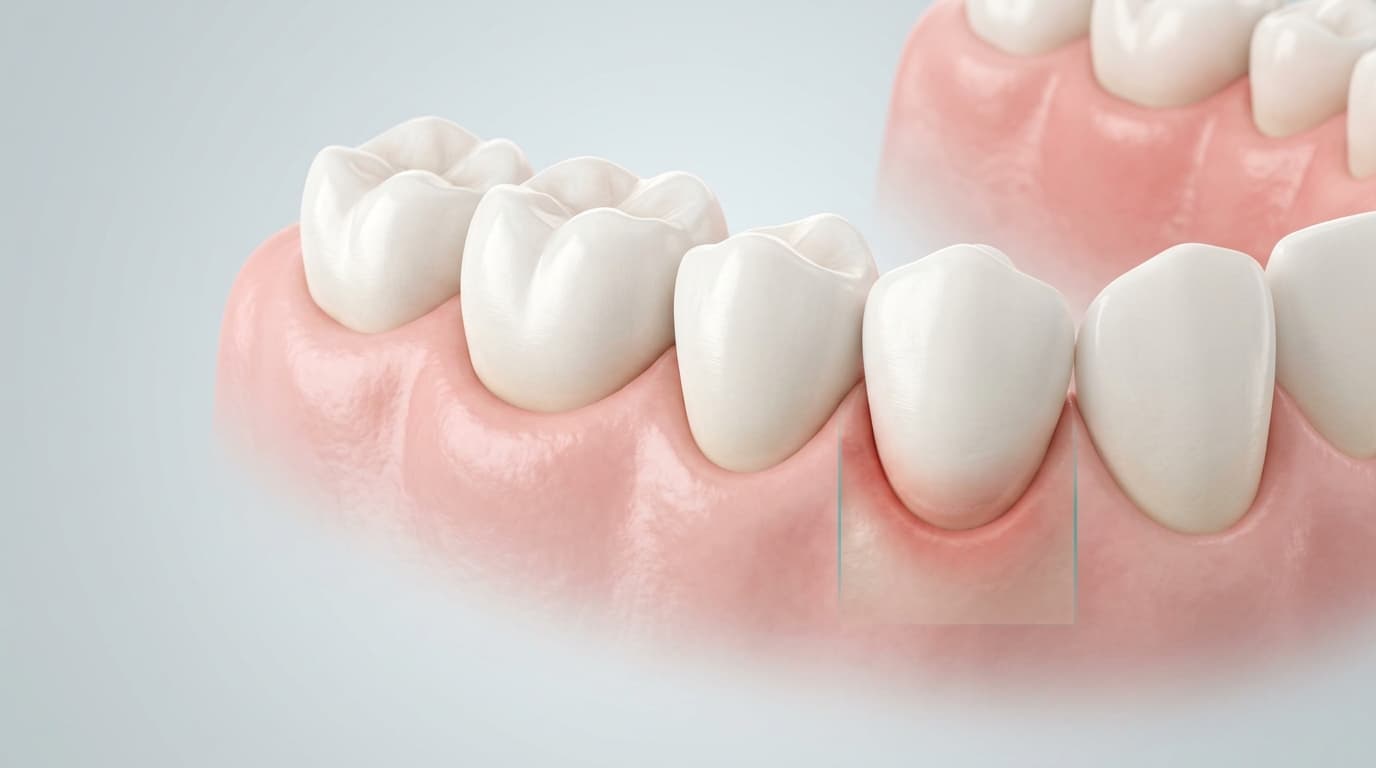
Gum inflammation — medically known as gingivitis — is a superficial, bacterially induced inflammation of the gingival margin (marginal gingiva) around one or more teeth. It always develops where plaque (a biofilm made of bacteria, saliva, and food debris) remains on the tooth surface for more than 24 to 72 hours. The good news: Gingivitis is completely reversible if the plaque is removed and the root cause is eliminated.
Gingivitis must be strictly differentiated from periodontitis. In periodontitis, the inflammation reaches deeper: the periodontium (periodontal ligament), the root cementum, and the alveolar bone are broken down. This leads to the formation of periodontal pockets with probing depths of more than 4 mm, and the bone loss is irreversible — it can be stopped, but lost bone structure does not grow back.
In numbers: periodontally healthy gums are rare — according to the Sixth German Oral Health Study (DMS • 6, 2025), only just under 4% of 35- to 44-year-olds show no signs of periodontal disease at all. Around 14 million people in Germany have severe periodontal disease (DMS • 6).
The decisive factor for a patient's course of action is therefore: If bleeding gums only appear occasionally and disappear within a few days after intensified oral hygiene, it is almost always pure gingivitis. If the bleeding persists despite careful cleaning, if teeth become loose, or if pus appears, the transition to periodontitis is possible — and the diagnosis must be made by a dentist. In the next section, we explain how to reliably recognize the warning signs.
Recognizing Symptoms: What are the Typical Signs?
Gingivitis usually develops gradually. Many patients notice the first signs when brushing their teeth or when eating hard foods. The classic list of symptoms includes five main signs:
- Redness of the gingival margin (instead of pale pink, the gingiva appears dark red to bluish-livid).
- Swelling with a loss of the typical stippling (orange peel texture).
- Bleeding gums when brushing or upon contact with food — the most sensitive early sign.
- Sensitivity to pressure when chewing or flossing.
- Bad breath (halitosis) caused by bacterial metabolic products, especially volatile sulfur compounds.
These five symptoms alone still point to a reversible gingivitis. However, warning signs of an escalation to periodontitis or an acute periodontal abscess include:
- Pus at the gingival margin (visible even with slight pressure or as a pustular elevation).
- Periodontal pockets over 4 mm probing depth (measured in the practice with a periodontal probe).
- Exposed tooth necks due to receding gums (recession).
- Tooth mobility or the shifting of individual teeth.
- Fever, fatigue, swollen lymph nodes — indications of systemic involvement.
Practical self-assessment: Brush consistently twice a day with a soft brush for a week and use dental floss once a day. If your gums are still bleeding after 7 to 10 days, the inflammation is too deep for home remedies alone and should be evaluated by a dentist. The next step is then root cause analysis — what specific factors are promoting the inflammation in your case?
Causes: Why Does Gingivitis Develop?
By far the most common cause of gingivitis is plaque biofilm — an organized bacterial community that forms on all tooth surfaces within 24 hours. If plaque is not removed mechanically on a daily basis, the biofilm matures, becomes more pathogenic, and increasingly irritates the gums. If left even longer, it mineralizes within a few days into tartar (calculus), which can no longer be removed with a toothbrush or floss and attracts new plaque as a retention site.
In addition to this local cause, there are a number of contributing risk factors that can trigger, worsen, or tip gingivitis into periodontitis:
- Smoking — reduces blood flow to the gums (paradoxically causing them to bleed less, which delays detection of the disease), while nicotine simultaneously accelerates bone loss in periodontitis.
- Poorly controlled diabetes mellitus — increases the risk of periodontitis by a factor of 2 to 3 and impairs healing.
- Pregnancy hormones — an increase in progesterone increases vascular permeability; "pregnancy gingivitis" frequently develops during pregnancy (see special section).
- Medications — calcium channel blockers (e.g., nifedipine for high blood pressure), cyclosporine after organ transplants, and certain antiepileptic drugs (phenytoin) can trigger gingival overgrowth where plaque accumulates very stubbornly.
- Poorly fitting crowns, bridges, or dentures — overhanging margins, pressure points, and cleaning obstacles promote local inflammation.
- Mouth breathing (e.g., due to chronic rhinitis, obstructed nasal breathing) — dries out the mucous membrane and reduces the antibacterial effect of saliva, especially on the upper anterior teeth.
- Vitamin C deficiency — classic scurvy is rare here, but subclinical deficiency occurs with very one-sided diets and impairs collagen synthesis in the periodontium.
- Stress — raises cortisol levels, dampens the immune system, and exacerbates nighttime teeth grinding (bruxism), which in turn traumatizes the gums.
For therapy, this means: Home remedies and better oral hygiene eliminate the local cause (plaque). The systemic risk factors — especially smoking and diabetes — must be addressed at the same time, otherwise the inflammation will reliably return. In the next section, we will show which home remedies against local inflammation actually have proven efficacy.
Home Remedies That Work: The Evidence-Based Overview
Not every home remedy recommended by friends stands up to scientific scrutiny. We have evaluated the six most popular applications according to current studies — from "strong" (multiple clinical studies, consistent results) to "moderate" (individual studies, plausible effect) to "weak" (predominantly anecdotal reports, inconsistent data).
| Home Remedy | Mechanism of Action | Level of Evidence | Application |
|---|---|---|---|
| Chamomile tea rinse | Bisabolol and matricin act as anti-inflammatories, flavonoids reduce oxidative stress in the gingiva. | Strong — multiple in-vitro and clinical studies on anti-inflammatory efficacy. | Steep 2 chamomile tea bags for 10 min., let cool to body temperature, rinse for 30 sec., 3× daily for 5–7 days. |
| Sage tea rinse | Thujone and tannins act astringently and antibacterially, inhibiting the plaque biofilm. | Strong — positive in-vitro evidence against periodontopathic bacteria; clinical use traditionally proven. | Steep 1–2 tsp dried sage in 250 ml hot water for 10 min., cool down, rinse for 30 sec., 2–3× daily. |
| Saltwater rinse | Osmotic effect — draws fluid out of the tissue, reduces swelling, mechanically supports wound cleaning. | Strong — classic home remedy, proven in clinical studies for postoperative wound healing. | Dissolve 1 tsp (~5 g) of salt in 250 ml lukewarm water, rinse for 30 sec., DO NOT swallow, 3× daily, max. 5 days. |
| Oil pulling with coconut oil | Lauric acid has antibacterial effects, mechanical plaque reduction during "oil pulling". | Moderate to weak — some small studies show plaque reduction comparable to chlorhexidine; a systematic review (Gbinigie et al. 2016) rates the evidence as limited. | Swish 1 tbsp (~15 ml) coconut oil through teeth on an empty stomach for 10–20 min., then spit out (DO NOT dispose of in the drain — causes clogs). |
| Turmeric paste | Curcumin acts in vitro as an anti-inflammatory (inhibits NF-κB), antibacterial, and antioxidant. | Weak to moderate — positive pilot studies as a turmeric mouthwash (0.1–1%), but small sample sizes. | Mix 1/4 tsp turmeric with a little water to form a paste, apply once daily for 1–2 min. to the inflamed gums, then rinse out. Note: stains teeth and fabrics yellow. |
| Aloe vera gel | Acemannan and salicylic acid with anti-inflammatory and wound-healing promoting effects. | Moderate — some clinical studies show reduction of plaque and gingival indices as a mouthwash; efficacy in severe periodontitis unclear. | Apply pure aloe vera gel (pharmacy grade, no additives) thinly to the gums 2× daily or use as a rinse (1 tsp gel in 100 ml water). |
Important context: Home remedies treat the symptoms and relieve acute inflammation — they do not reliably eliminate the cause (plaque and tartar). If the inflammation does not improve significantly after 5 to 7 days of consistent application combined with intensified oral hygiene, there is no way around a visit to the dentist. In the next section, we will first show you which supposed home remedies you should better avoid.
Home Remedies That Do NOT Work — and Sometimes Cause Harm
Just as important as recommending good home remedies is warning against applications that are either ineffective or actively cause harm. In our practice, we regularly see patients whose symptoms have been further worsened by "well-meaning" home medicine cabinet experiments.
- Pure clove oil on open inflammation: Eugenol, the main active ingredient in clove oil, is analgesic (numbing) in low concentrations — but when applied undiluted, it is cyto- and neurotoxic. There are documented cases of mucosal necrosis and nerve damage after repeated use. If used at all, it should only be heavily diluted (max. 1 drop per 10 ml of carrier oil) and never on open wounds.
- Undiluted tea tree oil: Tea tree oil contains terpenes that, in high concentrations, are highly irritating to the oral mucosa. Case reports describe contact dermatitis and burning mucosal redness. Additionally, it is neurotoxic if swallowed in large amounts — especially relevant for children.
- Mouthwashes with high alcohol content (over 20%): Prolonged use dries out the mucous membrane, destroys the healthy oral microbiome, and can paradoxically worsen bad breath. Individual observational studies have seen signs of an increased risk of oral cancer with chronic use — the data is disputed, but as a precaution, we recommend alcohol-free products.
- Lemon juice or apple cider vinegar for rinsing: The acid irreversibly erodes tooth enamel (pH below 5.5). The often-touted "antibacterial" effect is clinically negligible, while the loss of hard tooth structure is demonstrable.
- Hydrogen peroxide 3% undiluted: Often recommended as a home remedy, it irritates the mucous membrane with repeated use and can lead to white, sloughing plaques upon prolonged contact. Dental practices only use peroxide in controlled concentrations and application times.
- Antibiotics from the "home medicine cabinet": Leftovers from previous prescriptions (e.g., amoxicillin) should never be taken on one's own initiative for gingivitis. Uncritical use of antibiotics promotes resistance and does not work for pure gingivitis anyway — the cause is mechanical (plaque), not systemic.
Rule of thumb: Anything that burns, corrodes, or smells very strong is not a good idea on inflamed gums. Gentle, plant- or salt-based applications are always preferable. In the next section, we compare the two bestsellers of the home medicine cabinet head-to-head.
Sage Tea vs. Chamomile Tea — Which is Better?
Both chamomile (Matricaria chamomilla) and sage (Salvia officinalis) have been anchored in European oral hygiene traditions for centuries. Both are well-researched, both have few side effects — but they work via different mechanisms and are suitable for slightly different situations.
Chamomile — Profile: The most important active ingredients are bisabolol, matricin, and chamazulene (formed from precursors during tea preparation), as well as apigenin-containing flavonoids. Its effect is primarily anti-inflammatory and wound-healing. It is the first choice for severely reddened, swollen, "irritated" gums and for minor mucosal lesions (canker sores).
Sage — Profile: Main active ingredients are thujone, cineole, rosmarinic acid, and tannins. The tannins have an astringent effect — they contract the irritated tissue and reduce bleeding — and have an antibacterial effect on the growth of periodontopathic germs. Sage is the first choice when bleeding and plaque accumulation are the primary issues.
Combination Strategy: In practice, a daily rotation has proven effective: a sage tea rinse in the morning (antibacterial, reduces bleeding) and a chamomile tea rinse in the evening (anti-inflammatory overnight). Alternatively, use sage for 3 to 5 days as "initial therapy", followed by chamomile for 5 to 7 days for healing.
Step-by-step Preparation:
- Put 1 to 2 teaspoons of dried herbs (or 2 high-quality tea bags without added flavors) into a cup of 250 ml boiling water.
- Cover and let steep for 10 minutes (for sage, up to 12 to 15 minutes is fine — tannins take longer to extract).
- Let it cool to body temperature (~37 °C), strain, and maybe test a sip — rinsing while hot is counterproductive.
- Rinse thoroughly for 30 seconds, forcing the liquid through the interdental spaces. Then spit it out, do not swallow (sage tea in particular should not be drunk in large quantities due to the thujone).
- Do not eat or drink anything for half an hour after rinsing so the active ingredients can remain on the mucous membrane.
Duration of Use: 5 to 7 days for acute gingivitis, 3 times a day after main meals. If the symptoms do not measurably improve within this period (less bleeding, less redness), we need to discuss a professional cleaning. Up next: the correct saltwater rinse — simpler, but often done wrong.
Rinsing Properly with Saltwater — The Practical Guide
A saltwater rinse is the oldest and most cost-effective home remedy for gingivitis. It works via a simple osmotic effect: The higher-concentration saltwater draws fluid out of the inflamed, fluid-rich gum tissue, swelling subsides, and the mechanical rinsing action removes loose food debris and bacteria from irritated niches.
The right recipe:
- Amount of salt: 1 level teaspoon (approx. 5 g) of table, sea, or Himalayan salt. The crucial factor is the concentration, not the type of salt.
- Amount of water: 250 ml of lukewarm (not hot!) water — approx. 37 °C, body temperature. Hot water further irritates the inflamed gums.
- Dissolving: Stir vigorously until the salt is completely dissolved — undissolved crystals act like sandpaper on tooth enamel.
- Rinsing: Take a sip, actively swish it through your teeth and over the affected gums for 30 seconds. Let it linger especially on the inflamed side.
- Spit out, do not swallow: After rinsing, the water contains bacteria, dissolved proteins, and potentially pus — strictly spit it out. This is especially true for cardiovascular or kidney patients on a low-salt diet.
Frequency and Duration: 3 times a day after main meals (breakfast, lunch, dinner), ideally after regular tooth brushing. The recommended application period is a maximum of 5 consecutive days. Prolonged use can dry out the oral mucosa and compromise the oral microbiome — if symptoms persist, a visit to the dentist is the right step, not extending the saltwater regimen.
Special Application Situations: After a tooth extraction or periodontal surgery, we recommend the saltwater rinse starting the day after the procedure for 7 to 10 days — here the wound-cleaning effect predominates. For fresh wounds, rinse only gently and not vigorously to avoid dislodging the blood clot. Saltwater is also suitable as a supplement during pregnancy gingivitis because — unlike turmeric or clove oil — it is proven to be safe.
Saltwater alone cannot replace causal therapy. If you want to keep your gums healthy long-term, you must also optimize your daily oral hygiene — the next section shows exactly how this looks in practice.
Adapting Proper Oral Hygiene for Gingivitis
When the gums are inflamed, many patients intuitively react by brushing less — out of fear of bleeding and pain. That is exactly the wrong reflex: less brushing means more plaque, and more plaque means more severe inflammation. The right approach is to clean more gently, but more consistently.
The right brush: For the duration of the acute inflammation, switch to a soft (soft, not "medium"!) manual or electric toothbrush with rounded bristles. Medium-hard brushes increase gingival irritation; hard brushes are generally contraindicated for inflamed gums, even for "robust" adults.
The Modified Bass Technique is the standard brushing technique for gingivitis:
- Place the brush at a 45° angle to the gingival margin so the bristle ends dip into the sulcus (gum crevice).
- Vibrate the brush in place with small, jiggling movements to loosen plaque — no large sweeping motions, which traumatizes the gums.
- Then sweep the brush away from the gums towards the chewing surface of the tooth ("from red to white").
- Work on each tooth individually for 5 to 10 seconds, systematically working from back to front.
- Total brushing time 2 to 3 minutes, twice a day.
Dental floss and interdental brushes: A large share of tooth surfaces lies in the spaces between the teeth and cannot be reached with a toothbrush. For healthy, tight gums, we use dental floss; for receding gums and wider spaces, we use interdental brushes of the appropriate size (ISO 0 to 7; we determine the size in the practice so the brush neither injures the space nor sits too loosely). Once a day in the evening is sufficient; the movement should be a gentle back-and-forth, not a "sawing" motion.
Electric toothbrushes — Pros and Cons: Meta-analytically, oscillating-rotating and sonic toothbrushes have proven slightly superior to manual toothbrushes, especially in patients with suboptimal brushing technique. During the acute inflammatory phase, we recommend the "Gum Care" or "Sensitive" mode with a soft brush head. Reduce pressure as much as possible — modern models have pressure sensors that warn against pressing too hard.
Tongue cleaning: A significant part of the oral flora resides on the tongue. A tongue scraper made of stainless steel or plastic, gently guided from back to front 1× daily, reduces the overall bacterial load and noticeably relieves bad breath. In the next section, we clarify when home remedies plus oral hygiene are no longer enough — and a trip to the dentist becomes necessary.
When to See a Dentist? Specific Red Flags
Home remedies and optimized oral hygiene resolve many cases of gingivitis within a few days. However, there are clearly defined warning signals where self-treatment is no longer appropriate and a dental evaluation becomes urgent. You should turn the following eight scenarios into a treatment appointment within three working days — on the same day in the event of a fever or rapidly increasing swelling.
- Bleeding gums lasting longer than 7 days despite consistent, gentle oral hygiene and rinses.
- Pus discharge at the gingival margin or with light pressure on the gums — an indication of a periodontal abscess.
- Severe swelling with facial asymmetry, restricted mouth opening (trismus), or difficulty swallowing.
- Fever over 38.5 °C (101.3 °F), chills, or fatigue combined with gum discomfort — potential systemic spread.
- Tooth mobility of single or multiple teeth, bite changes, shifting of previously stable teeth.
- Exposed tooth necks with sensitivity to cold or sweets — an indication of periodontal recession.
- Strong, persistent bad breath that does not disappear despite brushing and tongue cleaning.
- Recurring inflammation — the gums "flare up" several times a year: this is often driven by systemic causes like diabetes that must be addressed.
In an emergency: A fever over 39 °C (102.2 °F), severe facial swelling, or difficulty breathing or swallowing is a potentially life-threatening dentogenic infection. Visit an emergency dental service or a hospital emergency room immediately. In Munich, the dental emergency service of the KZV Bayerns is available.
What happens at the dentist appointment? We record the Periodontal Screening Index (PSI) — a standardized finding in which the deepest probing depth is determined per sextant. A PSI of 0 to 2 means gingivitis or mild irritation and is treated with a Professional Dental Cleaning (PTC). A PSI of 3 to 4 points to periodontitis, which is then followed by a comprehensive periodontal examination with full pocket charting and X-ray diagnostics. In the following section, we explain exactly what a PTC achieves and when health insurance covers periodontal therapy.
Professional Dental Cleaning (PTC) and Periodontal Therapy
A Professional Dental Cleaning (PTC) is the decisive lever against gingivitis because it eliminates the main cause against which toothbrushes and dental floss are powerless: mineralized plaque (tartar) and hard deposits below the gingival margin.
Procedure for a PTC in 4 steps (total duration 45 to 60 minutes):
- Assessment and disclosing: A dental hygienist (DH) or dental prophylaxis assistant (ZMP) records an oral hygiene status, makes plaque visible with a disclosing solution, and documents bleeding and plaque indices as a baseline finding.
- Supragingival cleaning: Above the gumline, tartar is removed with hand instruments (scalers, curettes) and an ultrasonic device. At the same time, discoloration from coffee, tea, or red wine is removed using a powder stream device (air-polishing) with fine glycine or erythritol particles.
- Subgingival cleaning up to approx. 3 mm pocket depth: Careful removal of concretions just below the gum margin with fine hand curettes and special ultrasonic tips.
- Polishing and fluoridation: All tooth surfaces are polished (a smooth surface = less plaque accumulation), and finally, a highly concentrated fluoride gel is applied to remineralize the hard tooth structure.
Billing and Frequency: PTC is generally a private service; many statutory health insurers now subsidize it through bonus programs, and private health insurers usually cover it completely. We'll share your individual out-of-pocket share in advance. Recommended frequency: every 6 months for a healthy oral cavity, every 3 to 4 months for periodontitis patients.
Periodontitis Therapy (PAR Directive 2021): If periodontitis (PSI 3 or 4 plus X-ray findings) is diagnosed, systematic periodontal therapy follows according to the G-BA directive, which was revised in July 2021. Covered by statutory health insurance. The therapy includes:
- Periodontal consultation and oral hygiene instruction (OHI).
- Anti-infective therapy: closed scaling and root planing of all diseased teeth in one to two sessions.
- Re-evaluation after 3 to 6 months; surgical correction for residual pockets ≥ 6 mm.
- Supportive Periodontal Therapy (SPT) over 2 years at risk-stratified intervals (3 to 12 months).
The PAR directive is the strongest medical lever against bone loss and tooth loss — many patients keep their teeth for decades thanks to structured SPT. Detailed information and appointment scheduling for periodontitis treatment can be found on our page Periodontics in Munich-Bogenhausen. Next: the frequently overlooked special case — gingivitis under dentures.
Gingivitis with Dentures: A Special Case
Denture wearers have a significantly higher risk of localized gingivitis. Two mechanisms often interlock here: pressure sores caused by poorly fitting dentures and plaque accumulation on the denture surfaces and under the denture base. Typical complaints include local redness, pain while wearing them, small painful pressure ulcers, and — as a chronic variant — so-called denture stomatitis with widespread redness of the palate, often in combination with a Candida colonization.
Denture cleaning done right:
- Clean thoroughly at least once a day using a denture brush (stiffer bristles, not intended for natural teeth) and denture cleaning paste or mild soap. Toothpaste for natural teeth contains abrasives that roughen the acrylic and promote plaque retention.
- Additionally, soak the dentures in a cleaning tablet (enzyme- or active oxygen-based) twice a week for 15 to 30 minutes according to package instructions. Afterwards, brush again and rinse under running water.
- Do not wear the dentures at night, but store them in a dry denture container — the mucous membrane needs the regeneration phase.
Adhesive cream hygiene: Adhesive creams are helpful but can cause problems if used incorrectly. Residues must be completely removed every day, otherwise, a moist, nutrient-rich film remains between the mucous membrane and the denture — the ideal environment for Candida and prolonged gingivitis. Clean the underside of the denture in the evening with a soft brush and rinse thoroughly with lukewarm water; the oral mucosa should also be gently massaged with a soft brush at the same time.
Relining and Rebasing: The jawbone and soft tissues change over the years — a denture that initially fit perfectly can become loose or "wobbly" after 2 to 5 years. This creates pressure points, microscopic injuries to the mucous membrane, and inflammation. A reline (rebasing) restores the optimal fit in a single 45 to 60-minute appointment. The effort depends on denture type (partial or complete) and scope — we prepare an individualized treatment and cost plan.
If denture stomatitis persists despite careful cleaning, we test for Candida with a swab and treat with a local antifungal if necessary. In the next section, we address a second special case that is often underestimated: pregnancy gingivitis.
Gingivitis in Pregnancy
Many pregnant women develop what is known as pregnancy gingivitis during the course of their pregnancy. The main cause is hormonal: The rise in progesterone and estrogen increases the vascular permeability of the gingiva, causing the gums to become spongy, bleed more easily, and be more sensitive to bacterial plaque. In addition, some women experience vomiting in the first trimester, which lowers the pH value in the oral cavity and further irritates the mucous membrane.
Why early treatment is so important: Several large cohort studies have shown a connection between untreated periodontitis and premature birth as well as low birth weight. The mechanism is not yet fully understood, but a systemic spread of inflammation is suspected. Consistent oral hygiene and, if necessary, PTC measurably reduce this risk.
Safe home remedies during pregnancy:
- Saltwater rinse — harmless as long as it is not swallowed.
- Chamomile tea rinse — safe to use as a rinse; however, consuming large quantities of chamomile tea as a beverage in the first 12 weeks is advised against (a very conservative recommendation by some midwives, not strongly supported by science).
- Aloe vera gel — topically harmless on the gingiva. Internal ingestion of aloe vera juice should be avoided during pregnancy.
To avoid during pregnancy:
- Sage tea — thujone is considered to affect the uterus in larger amounts. Many gynecologists consider it acceptable as a brief mouthwash, but it should be avoided as a daily drink.
- Turmeric in medicinal doses — curcumin can influence uterine contractility; safe as a normal spice in food.
- Clove oil — exposure to eugenol in high concentrations is not recommended.
- Tea tree oil — avoid due to terpene content and unclear data.
- Chlorhexidine mouthwashes — only after consulting a dentist or gynecologist and strictly limited in duration.
Dental care: We recommend an additional prophylaxis appointment in the 2nd trimester (between gestational weeks 13 and 26) — at this time, the unborn child is the most robust and treatment stress is lowest. X-rays are only taken during pregnancy if absolutely necessary and with a lead apron. After birth, the hormonal environment usually normalizes within a few weeks, and the gingivitis heals with good oral hygiene. In the final section, we will show you exactly how we can help in our practice in Oberföhring.
Gingivitis in Munich-Oberföhring: Our Practice
Dr. Christina Dickel and her team have been caring for patients from Oberföhring, Bogenhausen, Johanneskirchen, and the entire northeast of Munich with gum problems for years. Our approach combines evidence-based prevention, structured periodontitis therapy according to the 2021 G-BA directive, and individualized oral hygiene instruction.
Our services for gingivitis and periodontitis:
- Professional Dental Cleaning (PTC) every 6 months as baseline prevention — every 3 to 4 months for periodontitis patients and heavy smokers as part of SPT.
- Periodontal consultation with structured periodontal assessment, oral hygiene instruction, and treatment planning according to current guidelines.
- Emergency appointments for acute swelling, abscesses, or severe bleeding gums — usually within 24 hours.
- Individualized denture prophylaxis including fit checks, relining, and fungal diagnostics for denture stomatitis.
- Pregnancy consultation with gentle hygiene protocols in the 2nd trimester.
Appointments and Accessibility: You can book appointments online via our booking system, by phone, or by email. The practice is just a few minutes' walk from the U4 subway (Arabellapark); parking is available directly at the building. We speak German and English.
What to bring to your appointment: Your insurance card, bonus booklet (if available), a current medication list, and information about known medical conditions such as diabetes, bleeding disorders, or heart valve replacements. If your gums are bleeding heavily, please brush gently before your appointment and do not rinse, so we can accurately assess the condition.
After the appointment: You will receive a personalized treatment and cost plan, written oral hygiene instructions, and — if indicated — a prescription for short-term chlorhexidine therapy. For periodontitis, we will accompany you for 2 years in structured SPT to ensure the initial treatment success remains stable. We describe Professional Dental Cleaning at our practice in detail on our page Professional Dental Cleaning in Bogenhausen.
Fallbeispiel
Typical course of treatment (example): chronic gum inflammation
Fictional example for illustration – not a real patient case.
Starting point. A smoker in her late thirties has noticed her gums bleeding almost every time she brushes for months. She does not use floss or interdental brushes, and her last check-up was several years ago.
Typical findings. Red, swollen gums and a strong tendency to bleed. Measuring the pocket depths and X-rays clarify whether it is gingivitis or already early periodontitis.
Typical course of treatment.
- Individual oral hygiene instruction including cleaning between the teeth.
- Professional teeth cleaning.
- Smoking-cessation advice.
- Follow-up after a few weeks; if periodontitis is present, systematic periodontal therapy.
What to expect. Pure gingivitis is reversible: with consistent oral hygiene the bleeding usually decreases markedly within a few weeks. If bone loss has already begun, periodontitis can be stopped but not fully reversed.
Häufige Fragen
What helps quickly against gingivitis?
Which home remedy works best for gingivitis?
How long does gingivitis last?
Why are my gums bleeding?
Is turmeric useful for gingivitis?
Does coconut oil pulling really help against gingivitis?
Chamomile tea or sage tea — which is better?
How often should I rinse with saltwater?
Is gingivitis contagious?
When do I have to go to the dentist with gingivitis?
What happens if gingivitis is left untreated?
Can my toothpaste cause gingivitis?
Does a chlorhexidine mouthwash help?
Gingivitis during pregnancy — what am I allowed to do?
What is the difference between gingivitis and periodontitis?
Weiterführende Themen
Verwandte Ratgeber
Artikel aus dem Blog
Behandlung in unserer Praxis
Quellen & Literatur
- DMS • 6 — Sechste Deutsche Mundgesundheitsstudie (IDZ, 2025)(abgerufen am 1.10.2026)
- Gbinigie O et al. — Effect of oil pulling in promoting oro dental hygiene: systematic review of RCTs (Complement Ther Med 2016)(abgerufen am 1.10.2026)
- DGZMK/DG PARO S3 Guideline: At-home mechanical biofilm management in the prevention and treatment of gingivitis(abgerufen am 23.4.2026)
- German Dental Association (BZÄK) — For Patients(abgerufen am 23.4.2026)
- IQWiG / Gesundheitsinformation.de — Gingivitis and Periodontitis(abgerufen am 23.4.2026)
- G-BA — Directive on the systematic treatment of periodontitis (PAR Directive)(abgerufen am 23.4.2026)
- Cochrane Review — Chlorhexidine mouthrinse as an adjunctive treatment for gingival health(abgerufen am 23.4.2026)