
Root Canal Treatment: Procedure, Pain & Prognosis (2026)
Verfasst von Dr. Christina Dickel · Zuletzt geprüft: 04/23/2026
Das Wichtigste in Kürze
- Root canal treatment (endodontics) saves inflamed teeth from extraction — the pulp and bacteria are removed, and the canal system is disinfected and tightly sealed.
- Procedure: Usually 2 to 3 appointments of 60 to 90 minutes each, spread over 2 to 4 weeks.
- Completely painless under local anesthesia; mild post-operative discomfort (sensitivity to tapping, chewing pain) for 2 to 5 days is normal.
- Success rate of initial treatment: 68–85% by strict healing criteria (systematic review, Ng et al. 2007).
- In case of failure: Root canal retreatment or apicoectomy (root end surgery) as Plan B — extraction with an implant as the last resort.
- Statutory health insurance covers anterior teeth fully; molars only if the tooth is considered worth saving and serves a meaningful purpose in the remaining dentition.
What is a root canal treatment?
A root canal treatment — technically endodontic therapy — is the tooth-preserving alternative to extraction when the inside of the tooth is inflamed or already dead. The goal: to completely remove the inflamed or necrotic pulp tissue (tooth nerve and blood vessels) from the tooth, clean and disinfect the entire canal system, and then seal it to be bacteria-tight. This preserves the tooth as a functional and chewing tool.
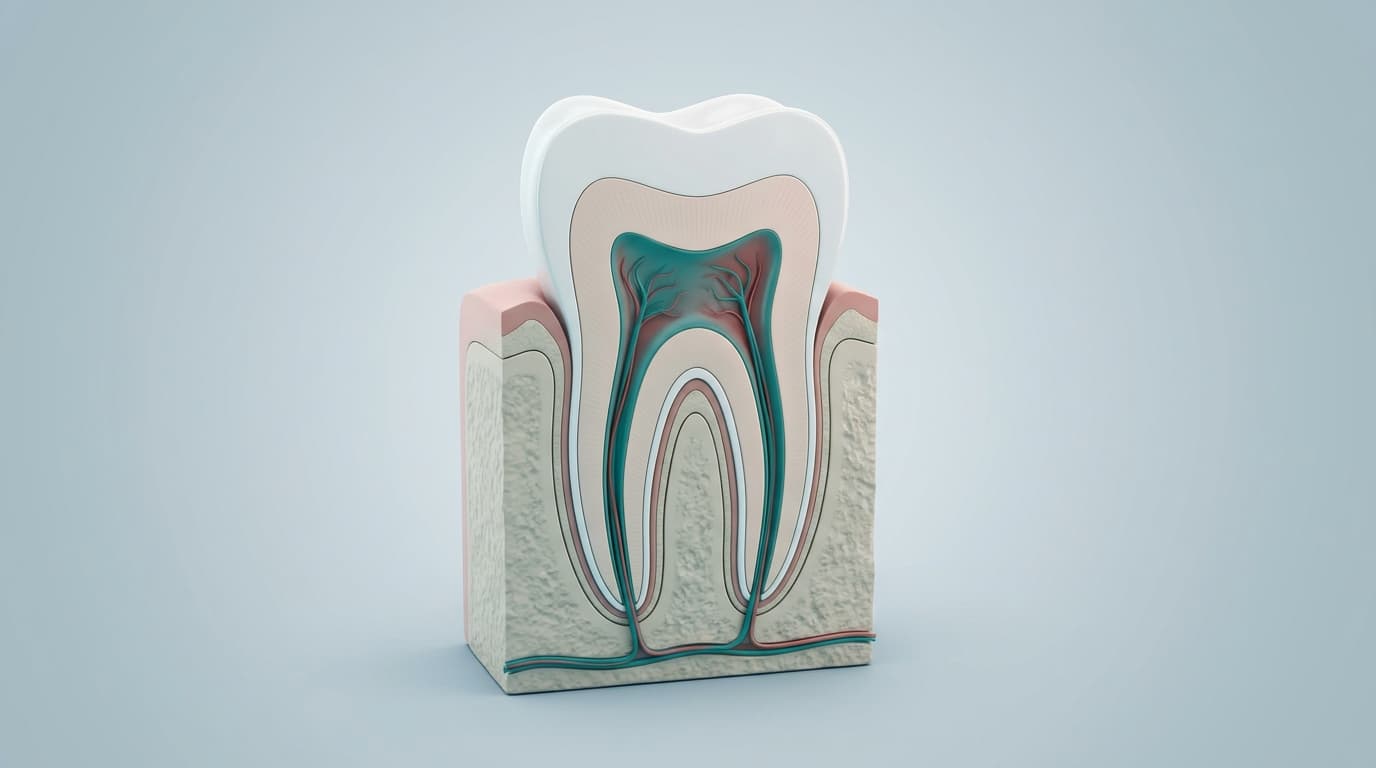
Every tooth has one or more root canals, which house the so-called pulp deep inside the tooth — a soft tissue consisting of nerves, arterioles, veins, and lymphatic vessels. With deep decay, trauma, or massive preparation, bacteria can penetrate the pulp and trigger inflammation (pulpitis). Without treatment, the inflammation spreads to the root tip (apical periodontitis) and leads to bone loss around the apex of the root.
After a successful root canal treatment, the tooth is technically "dead" in the strictest sense — it no longer has its own blood supply or sensitivity — but functionally it remains fully capable of bearing loads. Chewing force, bite, and aesthetics are generally preserved long-term, provided the tooth is protected with a stable restoration (core build-up plus crown for molars) after endodontic care.
Root canal treatment is one of the most demanding therapies in dentistry because the canal system is complex — molars often have 3 to 4 main canals as well as numerous lateral canals and apical ramifications that can only be reliably found under a surgical microscope. Modern endodontics therefore utilizes digital imaging (CBCT for complex anatomy), magnification optics, rotary nickel-titanium instruments, and activated rinse disinfection.
When is a root canal treatment necessary?
A root canal treatment is indicated when the pulp is irreversibly damaged or already dead, but the tooth is still to be saved. The decision is based on clinical examination (sensitivity test with cold, percussion, palpation), imaging diagnostics (bite-wing x-ray, periapical radiograph, CBCT for complex cases), and the patient's subjective symptoms.
The six classic indications are:
- Irreversible pulpitis. Persistent toothache, often worsening at night, triggered by cold, heat, or sweets. The pain does not subside even after the stimulus is removed and cannot be pinpointed to one specific tooth. The tooth is sensitive to tapping (positive percussion pain).
- Pulp necrosis. The pulp tissue has died — often painless, but x-rays and sensitivity tests show no reaction. Without therapy, there is a risk of bone inflammation and abscess formation.
- Apical (periapical) periodontitis. Inflammation around the root tip — either acute with pressure, tapping, and biting pain, or chronic as an asymptomatic incidental x-ray finding (apical radiolucency).
- Deep decay with pulp exposure. If a direct connection to the pulp becomes visible when drilling out the decay and the tissue is already inflamed, a root canal treatment is generally necessary.
- Dental trauma with pulp damage. Sports injury, fall, or blow — in the case of a complicated crown-root fracture or avulsion (tooth loss with replantation), endodontics is part of the standard therapy.
- Planned crown on a devitalized tooth. If a severely damaged, already non-vital tooth is to be crowned, the canal system must be endodontically secured before prosthetic restoration.
Not every toothache episode is an indication. A reversible pulpitis (short, stimulus-dependent pain due to deep decay without pulp exposure) can often still be saved with direct pulp capping or indirect pulp capping (treatment of "caries profunda"). Differentiating between reversible vs. irreversible is clinically not always trivial and requires careful diagnostics.
Symptoms of Apical Periodontitis
Apical periodontitis presents in two very different forms — acute with dramatic symptoms or chronic as an incidental finding. Knowing the warning signs allows for early reaction and saves the tooth with a better prognosis.
Acute apical periodontitis. It usually arises from untreated pulp necrosis. The cardinal symptom is severe, throbbing percussion pain — the affected tooth reacts to any touch, bite, and even vibration. Many patients describe the sensation that "the tooth feels elevated" because the inflammatory exudate pushes the tooth out of the periodontium. Also typical are: biting pain even with light contact with the opposing tooth, swelling of the cheek or gums, sometimes trismus (lockjaw), a dull, pressure-like constant pain without a cold stimulus, and in severe cases, fever, swollen lymph nodes, and a reduced general condition.
The reaction to temperature is characteristic: While pulpitis typically responds to cold, a non-vital tooth with apical periodontitis often reacts paradoxically — it is insensitive to cold and electricity but hypersensitive to heat and touch. Warm food or hot coffee exacerbates the pain, while cold drinks can provide short-term relief.
Chronic apical periodontitis. Often, there are no pain symptoms at all. The body has "encapsulated" the inflammation in a chronic equilibrium — creating an apical granuloma or a cyst, which appears on the x-ray as a round or oval radiolucency around the root tip. Such findings are frequently noticed during routine bite-wing or CBCT imaging. Although the tooth is symptom-free, there is a chronic bacterial focus that requires long-term treatment.
Fistula formation as a warning sign. A specific sign is the fistula — a fine pus tract that drills its way from the root tip area through the bone to the mucosa. It becomes visible as a small, pea-sized pimple on the gum, often with a yellowish center. Pus occasionally oozes from the fistula — patients may notice a salty, unpleasant taste in their mouth. The fistula acts as pressure relief: It prevents painful swelling but at the same time indicates that a chronic inflammation exists and definitely needs to be treated.
Anyone experiencing persistent pain for days, a feeling of pressure in a specific tooth, local gum swelling, or a small blister on the gum should schedule an emergency appointment — the sooner endodontic therapy begins, the better the prognosis and the lesser the bone damage.
Diagnosis: X-ray, CBCT, and Vitality Testing
A reliable diagnosis of pulpitis or apical periodontitis relies on the combination of clinical examination and imaging diagnostics. No single method is conclusive on its own — only the interplay of multiple findings allows for the correct treatment decision.
Clinical tests. We routinely use four procedures:
- Sensitivity testing (cold test). A cold spray on a cotton pellet is briefly applied to the tooth. A vital tooth reacts with a short, sharp stimulus that subsides after 1 to 2 seconds. Lingering pain indicates irreversible pulpitis; no reaction indicates necrosis.
- Electric vitality testing. Complements the cold test by electrically stimulating the pulp nerve. A negative response points to pulp necrosis.
- Percussion test. Light tapping with the handle of an instrument from vertical and horizontal directions. Pain points to periapical inflammation (apical periodontitis) or a periodontal cause.
- Palpation and bite test. Finger pressure on the mucosa and root tip region, bite test with a bite stick — specific for suspected longitudinal tooth fractures.
Imaging. The classic bite-wing x-ray provides an initial overview of decay and marginal bone; the periapical radiograph shows the root tip and any apical radiolucencies (granulomas, cysts). Both techniques are two-dimensional and low-radiation, which is why they are indicated for any suspected diagnosis.
For complex anatomies — such as molars with overlapping canals, retreatment cases, suspected longitudinal fractures, or preoperative planning for an apicoectomy — we additionally use Cone Beam Computed Tomography (CBCT). This 3D cross-sectional imaging detects additional mesiobuccal canals (often missed in maxillary second molars), apical lesions in early stages (smaller than 2 mm), and vertical root fractures much more reliably than 2D imaging.
Additionally, transillumination with an LED can be helpful when a longitudinal crown-root fracture is suspected: fracture lines stand out against healthy hard tooth structure because they do not transmit the light. We establish the treatment plan only after synthesizing all findings.
Root Canal Treatment Procedure — Step by Step
A modern root canal treatment is divided into five to seven precise work steps, which, depending on the findings, are spread over one or two appointments. In our practice, we use a surgical microscope, an electric endo motor with rotary nickel-titanium files, and activated rinse disinfection as standard. The total working time is 60 to 90 minutes per appointment.
- Local anesthesia (5 minutes). In the upper jaw, we use infiltration anesthesia; in the lower jaw, often an inferior alveolar nerve block or — alternatively — intraligamentary anesthesia. The goal: complete pain elimination throughout the entire treatment. For highly inflamed "hot pulps," an additional intrapulpal injection may be necessary.
- Dental dam isolation (3–5 minutes). A rubber sheet (dental dam) is attached to the tooth with a clamp. This protective shield isolates the tooth from saliva — essential for protecting the disinfected canal system from recontamination by oral bacteria. The dental dam is an international standard of any quality-oriented endodontics.
- Caries excavation and access cavity preparation (10–15 minutes). All decayed portions are removed, and the tooth crown is opened on the chewing surface (posterior teeth) or the back (anterior teeth) until the pulp chamber is accessible. The chamber roof is completely removed so all canal orifices are visible. For molars, we routinely locate three to four canal orifices under the microscope, sometimes more.
- Preparation of the root canals (8–12 minutes per canal). Using rotary nickel-titanium files (e.g., WaveOne Gold, ProTaper Next, Reciproc Blue), each canal is prepared up to the working length (determined electrically via an apex locator). The instruments expand the canal conically, remove infected dentin, and create space for the irrigating solution and later root filling.
- Chemical irrigation and ultrasonic activation (5–10 minutes). Parallel to the mechanical preparation, we irrigate with sodium hypochlorite solution (NaOCl 3–5%) — this agent dissolves organic tissue and kills bacteria along with the biofilm. This is followed by EDTA 17% to remove the smear layer, and another NaOCl rinse, each activated with ultrasound via a thin irrigation tip for improved penetration depth into lateral canals.
- Optional: Calcium hydroxide intermediate dressing (for infections, 10–14 days). For heavily infected, necrotic, or canals requiring retreatment, we place a calcium hydroxide (Ca(OH)₂) dressing inside the canal, seal it temporarily, and leave it to work for one to two weeks. Ca(OH)₂ has a highly alkaline effect (pH ~12), provides additional disinfection, and reduces the bacterial load before final filling.
- Obturation — root filling (15–20 minutes). After drying with paper points, we fill the canal system to be bacteria-tight. The standard is a gutta-percha cone (made from a natural resin of the percha tree) combined with a sealer (AH Plus or MTA-based). In our practice, we use warm vertical condensation — the heated gutta-percha adapts to lateral canals and apical ramifications more densely than cold single-cone techniques.
Finally, a post-operative x-ray is taken to check the quality of the root filling, followed by a dense temporary core build-up and — for posterior teeth — scheduling the final crown placement within 4 to 6 weeks. The crown is important: it circumferentially protects the fracture-prone root canal-treated tooth and drastically reduces the risk of late fracture.
Does a root canal hurt? Pain & Aftercare
The most common fear regarding a root canal is the fear of pain. The good news: Under modern local anesthesia, the root canal treatment is absolutely painless during the procedure. The old idea that a root canal is the "most painful treatment in dentistry" does not reflect today's reality — it stems from times before effective nerve blocks, rotary preparation, and surgical microscopes.
During the treatment. After the anesthesia takes effect (5 to 10 minutes), you will feel pressure, vibration, and water noises from the suction, but no pain. For particularly highly inflamed teeth ("hot tooth"), normal infiltration can occasionally fail to take full effect — in which case we supplement with intraligamentary or intrapulpal injections. Discuss your fears openly: We can administer more anesthesia at any time and take breaks.
After the treatment. In the following 2 to 5 days, mild to moderate post-operative discomfort is normal — it is based on the physiological healing reaction in the root tip area:
- Sensitivity to tapping and biting (percussion pain) when closing the jaw or chewing.
- A dull feeling of pressure in the treated tooth, especially when chewing hard foods.
- Slight swelling of the gums or the inside of the cheek around the tooth.
- Short-term local sensation of warmth.
For pain management, we recommend — provided there are no intolerances — Ibuprofen 400 mg (maximum three times a day, i.e., every 8 hours) or alternatively Acetaminophen 1000 mg (maximum four times a day, i.e., every 6 hours). Ibuprofen is usually more effective than Acetaminophen for inflammatory toothache because it also acts as an anti-inflammatory. Combine both active ingredients only after consulting a doctor.
When is it an emergency? Please visit us again immediately if any of the following symptoms occur:
- Severe, throbbing pain that does not improve after 24 hours despite Ibuprofen 400 mg.
- Noticeable swelling with a diameter of more than 3 cm, possibly with redness and warmth.
- Fever over 101.3 °F (38.5 °C), chills, or a general feeling of illness.
- Restricted mouth opening (lockjaw) or difficulty swallowing.
- Significantly increased throbbing that does not improve after three to five days but worsens.
This combination of symptoms can indicate an acute exacerbation of the apical inflammation or an extensive abscess — both require prompt medical intervention, potentially opening and draining, or accompanying antibiotic therapy.
Prognosis & Success Rate of Root Canal Treatment
Root canal treatment is one of the most successful therapies in dentistry — given that it can preserve an otherwise extraction-ready tooth for decades. Success is defined as the combination of being symptom-free, lack of clinical pathology, and radiological healing of apical lesions.
Success rates in numbers. For primary root canal treatment with thorough preparation, complete disinfection, and dense obturation, the success rate according to a systematic review (Ng et al. 2007) is 68 to 85%, measured by strict criteria of complete healing.
Factors influencing the prognosis:
- Canal complexity. A single-rooted anterior tooth with a straight canal has a better prognosis than an upper molar with four canals and pronounced curvatures. Mesiobuccal secondary canals (MB2) in upper first and second molars are often missed without a microscope and are then the main cause of failure.
- Presence of an apical lesion before therapy. If an apical radiolucency already exists, the success rate is lower because the bacterial population in the apical bone is larger and harder to eliminate.
- Primary treatment vs. retreatment. A first-time root canal treatment has better chances than a retreatment of a previously unsuccessfully treated tooth — retreatments achieve success rates of around 77% (Ng et al. 2008).
- Quality of the subsequent restoration. A root canal-treated tooth with a well-sealed crown and a ferrule effect of at least 1.5 to 2 mm of healthy hard tooth structure has a significantly lower fracture risk than a tooth that remains restored only with a filling. Studies show: the coronal restoration is at least as important for long-term success as the quality of the root filling itself.
- Time between endodontics and crowning. The longer the tooth is provided only with a temporary filling, the higher the risk of coronal leakage with re-infection. We recommend final restoration within 4 to 6 weeks.
- Patient factors. Oral hygiene, bruxism, periodontal status, and immune system health (e.g., diabetes) additionally influence long-term success.
Follow-up period. Radiological healing of an apical lesion takes 6 to 24 months based on experience. We therefore schedule follow-up appointments after 6 and 12 months with periapical x-rays, followed by every six months as part of routine check-ups. Anyone developing symptoms during this time — renewed biting pain, sensitivity to pressure, fistula formation — should visit us immediately because early retreatments have better prospects for success than late-treated failures.
Apicoectomy (Root End Surgery) — Plan B for Failure
An apicoectomy, also known as root end surgery, is the surgical counterpart to a root canal treatment. It is used when inflammation at the root tip persists despite professionally performed endodontic therapy, or if retreatment of the canal is not possible.
When is an apicoectomy indicated?
- Persistent apical periodontitis despite technically correct root canal treatment.
- An orthograde retreatment of the root filling is not possible — for instance, because a post core blocks the canal, there is extreme canal curvature, or a foreign body (broken instrument) is in the apical region.
- Apical cyst that needs to be resolved via surgical removal including histological verification.
- Chronic fistula with an apical radiolucency of over 5 mm in diameter after unsuccessful retreatment.
Procedure for an apicoectomy (60–90 minutes, outpatient under local anesthesia).
- Local anesthesia and mouth rinse with chlorhexidine.
- Creation of a gum flap (trapezoidal or submarginal incision) with elevation of the soft tissue.
- Fenestration of the bone with a rotary instrument over the root tip.
- Resection of the apical 3 mm of the root — this region contains most of the accessory lateral canals responsible for persistence.
- Curettage of the apical granuloma tissue and a histology sample if a cyst is suspected.
- Retrograde root filling with MTA (Mineral Trioxide Aggregate) or Biodentine — both materials are biocompatible and stimulate new bone formation.
- Flap repositioning and wound suturing with non-absorbable threads; suture removal after 7 to 10 days.
Success rate. An apicoectomy with a modern MTA retro-filling and microsurgical technique achieves success rates of around 94% (Setzer et al. 2010). Without a microscope and with conventional retro-filling (amalgam, historically), success rates were significantly lower (59% versus 94% with microsurgery, Setzer et al. 2010) — which is why we deliberately refer patients to surgically active colleagues equipped with microscopes for this therapy if we do not provide the surgical care ourselves.
Billing. Apicoectomy is a covered benefit under statutory health insurance if the tooth is considered worth saving — in which case the basic cost is covered. Higher-value services such as surgical microscopes, MTA retro-filling, and CBCT planning are billed privately per the German dental fee schedule (GOZ); we'll share the individual co-payment in the treatment and cost plan.
Compared to extraction with an implant, an apicoectomy is usually the superior option biologically, provided the tooth is otherwise stable and restorable — preserving the natural tooth with its proprioceptive feedback.
Root Canal: Statutory Coverage, Private Service, and Additional Services
Whether and to what extent statutory health insurance covers a root canal treatment depends primarily on whether the tooth is considered worth saving under GKV guidelines. Additionally, modern additional services beyond standard care may apply.
Anterior Tooth (1 to 2 Canals)
For anterior teeth (upper and lower incisors and canines), they are almost always considered worth saving — anterior teeth are aesthetically and phonetically irreplaceable, and their extraction would mean additional prosthetic effort. Therefore, the statutory health insurance covers the standard care entirely: access, manual preparation, root filling, and temporary seal.
Those wishing to benefit from modern additional services — surgical microscope, mechanical nickel-titanium preparation, warm vertical obturation, electronic length measurement, CBCT for complex anatomy — sign a private supplementary agreement billed per the German dental fee schedule (GOZ). The co-payment depends on canal count and effort and is transparently disclosed in the treatment and cost plan.
Molar (3 to 4 Canals)
For back teeth, the health insurance checks three criteria for preservation: (a) all canals are accessible and preparable, (b) the tooth can be restored with a core build-up and a crown, (c) the tooth closes a gap or is the last tooth in the quadrant (not a single-tooth gap at the end of the dental arch with no significance for statics). If these criteria are met, the root canal is covered by statutory insurance — if not, it is entirely a private service.
A quality-oriented molar root canal (microscope, electronic length measurement, Ca(OH)₂ intermediate dressing, warm obturation) is billed per GOZ. For four canals with pronounced curvatures or sclerosis, the effort is higher; we share the concrete figures in the individualized treatment and cost plan.
Comparison to Extraction + Implant
An implant with a superstructure is generally not a statutory insurance benefit — the fixed subsidy only covers the standard-care crown. A root canal treatment for a molar thus usually remains the biologically and economically superior option, provided the tooth is worth saving — natural anchorage in the jawbone including proprioceptive feedback is preserved.
Before every root canal treatment, we create a transparent treatment and cost plan that clearly separates statutory coverage and private co-payment. This allows you to clarify reimbursement in advance with your supplementary dental insurance.
What Happens if the Root Canal Treatment Doesn't Work?
Even with careful endodontics, a failure can occur — recognizable by recurring symptoms, a persistent or newly appearing apical radiolucency on the x-ray, or fistula formation months to years after treatment. The good news: In most cases, there are clearly defined treatment pathways to still save the tooth.
Three treatment options for root canal failure:
- Root canal retreatment (orthograde). We remove the existing root filling, prepare the canal system again, disinfect extensively (often with a longer Ca(OH)₂ intermediate dressing), and reseal. Retreatment is the first choice if a leaky or too short root filling, a missed canal (frequently MB2 on upper molars), or coronal leakage can be identified as the cause. Success rate around 77%.
- Apicoectomy (retrograde/surgical). If orthograde retreatment is not technically possible (a post blocks the canal, a broken instrument, extreme canal curvature) or has already been unsuccessful, an apicoectomy is the alternative. The success rate with a microsurgical technique using MTA retro-filling is around 94%.
- Extraction with implant or bridge. If the tooth is no longer salvageable due to a longitudinal fracture, massive bone loss, or periodontal hopelessness, extraction remains the only option. Following this, the gap can be restored with an implant (ideally after healing and possible bone grafting) or a conventional bridge.
Decision criteria. Which of the three options makes sense depends on the CBCT findings, the remaining tooth structure (ferrule effect), the periodontal situation, economic aspects, and the patient's willingness to cooperate. In a 30-minute consultation, we transparently discuss all options with you — including success rates, costs, and time required.
Second opinion recommended. For complex retreatment cases, we explicitly advise seeking a second opinion — ideally from a specialized endodontic practice. The decision "retreatment or extraction" is irreversible and deserves care. We are happy to help you obtain a second opinion and collaborate with several specialists in the Munich area.
Root Canal Treatment in München-Oberföhring: Our Practice
In our practice in München-Oberföhring, endodontics is a clinical focus — we perform it with quality-oriented additional services that go beyond statutory standard care. Our goal: to preserve the tooth in the best possible way instead of extracting it.
Technical equipment for root canal treatment:
- Surgical microscope with up to 25x magnification — essential for finding missed canals (MB2), identifying fine fractures, and precise control of the preparation up to the root tip.
- Endo motor with rotary nickel-titanium files (WaveOne Gold / ProTaper Next) for time-saving, gentle preparation, even of curved canals.
- Electronic length measurement (apex locator) for radiation-free, millimeter-precise determination of the working length instead of repeated measurement x-rays.
- Ultrasonic-activated irrigation disinfection with NaOCl 3–5% and EDTA 17% for greater penetration depth into lateral canals and better biofilm removal.
- Warm vertical obturation — heated gutta-percha adapts to lateral canals and apical ramifications more densely than cold single-cone techniques.
- CBCT diagnostics for complex cases (retreatment, MB2 search, suspected longitudinal fracture) — three-dimensional, low-radiation, directly on-site.
- Dental dam standard for every endodontic treatment — a basic requirement for uncontaminated therapy.
For anxious patients. We know that root canal treatment is associated with fear in the public perception — often from stories from the pre-microscope era. In our practice, we counter this with careful explanation, a calm treatment atmosphere, and — upon request — with sedation (nitrous oxide or intravenous twilight sedation) or treatment under general anesthesia in cooperation with an anesthesiologist. Speak to us actively about this topic; we take our time and find a solution.
Accessibility. The practice is centrally located in München-Oberföhring, bordering Bogenhausen; reachable via the U4 Arabellapark subway in just a few minutes on foot, with parking spaces directly at the building. For working patients, we offer early morning and evening appointments; we generally schedule emergency appointments for toothaches on the same or next business day.
If you currently have a toothache, notice sensitivity to tapping, or have been informed of an x-ray finding showing an apical radiolucency, you are welcome to schedule a consultation appointment. We thoroughly examine the initial situation and discuss all treatment options with you — from tooth preservation using modern endodontics to extraction with implant planning.
Fallbeispiel
Typical course of treatment (example): root canal treatment of a molar with crown
Fictional example for illustration – not a real patient case.
Starting point. For a few days a patient has had throbbing pain in a lower molar that gets worse at night. Deep decay reaches the dental nerve.
Typical findings. Long-lasting pain after cold and tenderness to tapping indicate an inflammation of the nerve that can no longer heal. X-rays show the number and course of the root canals and whether inflammation has already formed at the root tip.
Typical course of treatment.
- First appointment: anaesthesia, rubber dam, removal of the inflamed tissue, shaping and disinfection of the canals, medicated dressing.
- Second appointment: tight root filling, control X-ray and build-up of the tooth.
- A few weeks later: a crown, because root-treated molars without a crown fracture more often.
What to expect. Under anaesthesia the treatment is usually painless; the tooth can stay sensitive for a few days afterwards. Whether an inflammation at the root tip heals is shown by a control X-ray after a few months.
Billing. For molars, statutory insurance covers root canal treatment only under the conditions of the G-BA treatment guideline, for example when it preserves a closed row of teeth. Additional services are charged privately by agreement. The crown receives a finding-based fixed allowance.
Häufige Fragen
What happens during a root canal treatment?
Does a root canal hurt?
How long does a root canal treatment take?
When is a root canal necessary?
What are the symptoms of apical periodontitis?
What is the success rate of a root canal treatment?
How much does a root canal treatment cost?
Who pays for the root canal — health insurance or patient?
What is an apicoectomy?
How long does a root canal last?
Will I get a crown after the root canal?
What if the root canal treatment doesn't work?
Are there alternatives to a root canal treatment?
Can I eat immediately after a root canal?
Is a root canal-treated tooth "dead" forever?
Weiterführende Themen
Verwandte Ratgeber
Artikel aus dem Blog
Behandlung in unserer Praxis
Quellen & Literatur
- Ng YL et al. — Outcome of primary root canal treatment: systematic review, part 1 (Int Endod J 2007)(abgerufen am 1.10.2026)
- Ng YL et al. — Outcome of secondary root canal treatment: systematic review (Int Endod J 2008)(abgerufen am 1.10.2026)
- Setzer FC et al. — Outcome of endodontic surgery: meta-analysis, part 1 (J Endod 2010)(abgerufen am 1.10.2026)
- AWMF S1 Guideline "Good Clinical Practice: Root Canal Treatment" (DGZMK / DGEndo, Reg. No. 083-037)(abgerufen am 23.4.2026)
- German Society for Endodontology and Dental Traumatology (DGEndo) — Patient Guide(abgerufen am 23.4.2026)
- Manfredi M et al. — Single versus multiple visits for endodontic treatment of permanent teeth (Cochrane Systematic Review)(abgerufen am 23.4.2026)