
TMJ Pain: Causes, Self-Care & CMD Treatment (2026)
Verfasst von Dr. Christina Dickel · Zuletzt geprüft: 04/23/2026
Das Wichtigste in Kürze
- Craniomandibular Dysfunction (CMD) is the most common cause of TMJ pain — in population studies, about 10 percent of adults meet the criteria for a muscular CMD diagnosis.
- Heat helps with muscular tension (masseter, temporalis); cold is indicated for acute inflammation or trauma. In an unclear situation: try heat first, stop if symptoms worsen.
- Five simple self-care exercises (hold 10–15 seconds, 5–10 reps, 2–3× daily) have been proven effective for muscular CMD and are the first step in therapy.
- The bite splint (Michigan splint) is standard for nocturnal bruxism and basic CMD therapy — wear time is usually at night over 3 to 6 months. Billing varies (private service or statutory, depending on the type) — details in the individualized treatment and cost plan.
- Red flags requiring immediate dental evaluation: pain lasting over 2 weeks despite self-care, mouth opening under 40 mm, clicking with locking, fever/swelling, radiating pain into the ear or neck.
- Physical therapy and jaw exercises are used alongside the splint; the evidence on how well they work is, however, still uncertain.
What is TMJ Pain? Anatomy and Differentiation
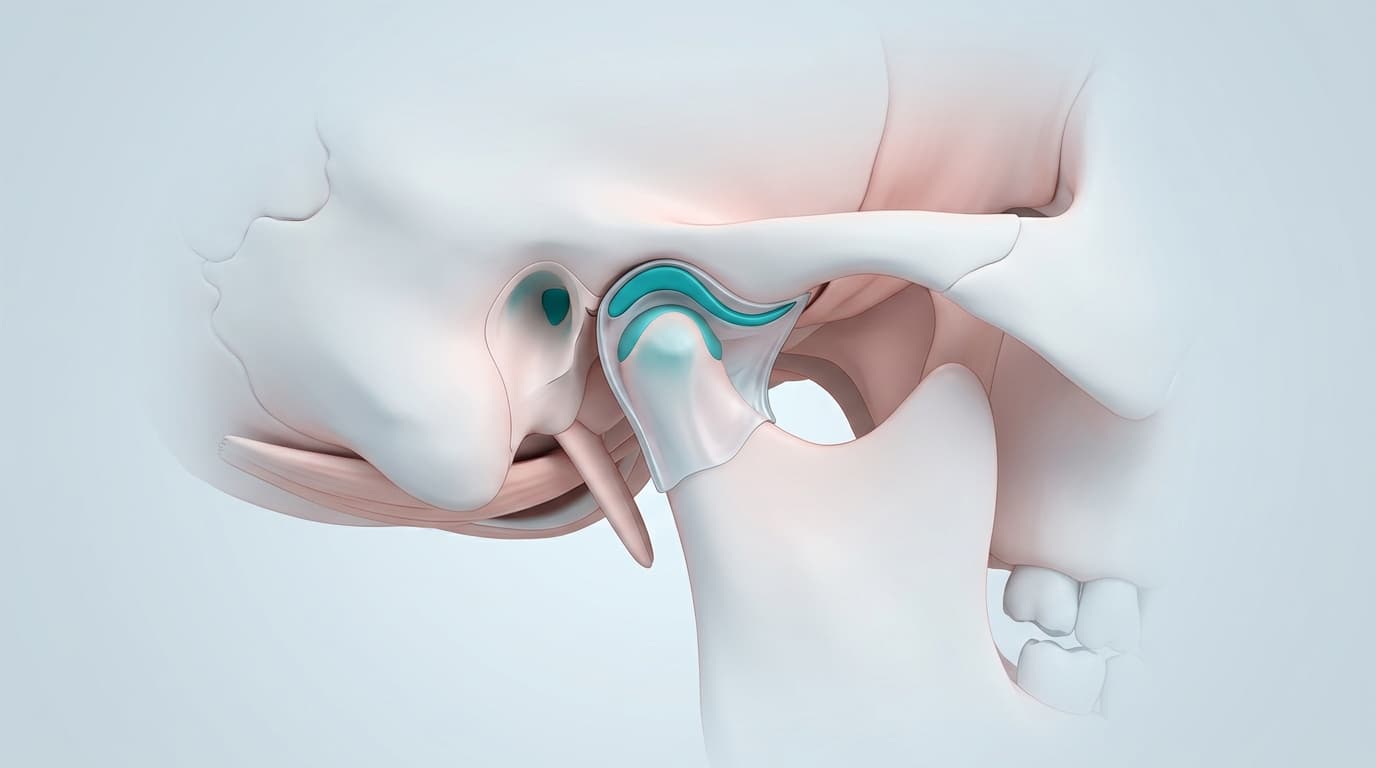
TMJ pain refers to any form of pain originating from the temporomandibular joint itself, the surrounding masticatory muscles, or adjacent structures. Medically, the joint is called the Articulatio temporomandibularis (TMJ) — it is one of the most complex joints in the human body, involved in every movement of chewing, speaking, yawning, and swallowing. Pain here is easily misinterpreted as "toothache" because the nerve supply is closely intertwined.
Anatomy in Brief. The temporomandibular joint consists of three main components:
- Condyle (Joint Head). The roller-shaped upper part of the mandibular ramus that inserts into the articular fossa of the temporal bone.
- Articular Fossa (Joint Socket). The hollow depression in the temporal bone directly in front of the external ear canal — which is why TMJ pain often radiates "into the ear".
- Articular Disc. A connective tissue disc between the condyle and fossa that divides the joint into two compartments and acts as a shock absorber. If this disc is displaced (partially or completely), the typical clicking occurs — with or without pain.
The TMJ is moved by four paired masticatory muscles: Musculus masseter (on the side at the angle of the jaw — the strongest muscle in the body relative to its cross-sectional area), M. temporalis (fan-shaped at the temple), M. pterygoideus medialis, and M. pterygoideus lateralis (both on the inside). If these muscles become chronically tense — for example, due to nocturnal grinding or clenching — muscular CMD develops.
Differentiation from Toothache. Because the trigeminal nerve supplies both the teeth and the TMJ, patients frequently confuse the two types of pain. Typical signs of a TMJ origin: pain with jaw movement (chewing, yawning), pain upon waking (indicating nocturnal bruxism), tenderness directly in front of the ear, clicking or grating, restricted mouth opening. Typical for toothache: reaction to cold/hot/sweet, localized pain on a specific tooth, pain on tapping an infected root tip. In any case of doubt, evaluation belongs in the hands of a dentist — a combination of medical history, palpation, clinical functional analysis, and possibly X-rays will clarify the issue securely.
Physiological Normal Values for Context. A healthy maximum mouth opening (interincisal distance, IID) in adults is in the range of 40 to 55 mm. An opening under 40 mm is considered restricted and is a key clinical indicator of CMD, disc displacement without reduction, or lockjaw. The lateral movement of the lower jaw (laterotrusion) should be ≥ 7 mm per side, and the forward movement (protrusion) ≥ 6 mm. We determine these values during every functional analysis (Section 7).
Causes: Seven Main Triggers of TMJ Pain
TMJ pain is rarely caused by a single factor. In practice, two to three of the following factors typically overlap. The seven main triggers — ranked by frequency:
- Craniomandibular Dysfunction (CMD), muscular. By far the most common cause. Chronic tension of the masseter and temporalis due to constant strain (teeth grinding, clenching, poor posture) leads to muscular pain, trigger points, and radiation into the head, neck, and temples. In population studies, about 10 percent of adults meet the criteria for a muscular CMD diagnosis (Manfredini et al. 2011); women are affected considerably more often than men.
- Bruxism (teeth grinding or clenching). Usually nocturnal, often unconscious. In surveys, about 13 percent of adults report frequent night-time grinding (Manfredini et al. 2013); daytime clenching and grinding is reported even more often. Typical consequences: morning jaw stiffness, dental abrasion (visible wear facets), waking up with a headache, cheek biting (linea alba), or tongue indentations. Bruxism is not purely a dental defect, but mostly a stress-associated central nervous system disorder.
- Stress and psychogenic factors. The biopsychosocial connection is well-documented: chronic stress increases masticatory muscle tone, shortens the deep sleep phase at night, promotes bruxism, and activates central pain processing. Many CMD patients report occupational stress, family conflicts, or persistent sleep problems in the months preceding the onset of pain.
- Occlusal factors (malocclusion). High fillings, poorly fitting crowns, missing posterior teeth, or orthodontic malalignments can load the TMJ asymmetrically. Not every occlusal disorder triggers CMD — the evidence for direct causality has been relativized in recent years — but single premature contacts or gross asymmetries should be clinically checked and corrected if necessary.
- TMJ Osteoarthritis. Degenerative changes of the joint surfaces and the disc. Typical: morning stiffness, grating sound (crepitus), creeping deterioration over months to years. Patients over 40 are more frequently affected; a CBCT or MRI shows subchondral sclerosis, osteophytes, or joint space narrowing.
- TMJ Trauma. A fall on the chin, blow to the face, sports injury (boxing, handball), but also forced yawning or prolonged dental treatment with a wide-open mouth can overstretch the capsule, ligaments, or disc. Acute post-traumatic pain with swelling and restricted opening requires a dental or oral surgical evaluation within 24 to 48 hours — especially to rule out a TMJ fracture.
- Rheumatic diseases (rare). Rheumatoid arthritis, ankylosing spondylitis, or psoriatic arthritis can, in rare cases, also involve the TMJ. Typical: bilateral pain, morning stiffness lasting over 30 minutes, other affected joints (hands, spine). In such cases, interdisciplinary evaluation with a rheumatologist is performed.
Rarer causes include tumors in the TMJ area, infectious arthritis after bacterial spread, central neuropathic pain (e.g., following shingles reactivation in the trigeminal area), fibromyalgia, and sleep apnea-associated bruxism. For the vast majority of patients, however, CMD, bruxism, and stress are the leading factors — and all three are highly treatable.
Self-Care: What Helps Immediately
In the acute phase of the first few days, the goal is to reduce pain, relax the masticatory muscles, and relieve the TMJ. The following basic measures are useful for almost all forms of mild to moderate TMJ pain:
- Soft diet for 3 to 5 days. Avoid chewy meat, chewing gum, hard bread crusts, nuts, and apples. Rely on soups, cooked vegetables, fish, rice, soft-cooked pasta, and yogurt. Goal: noticeably relieve the chewing muscles.
- Small bites, chew on both sides. Instead of chewing unilaterally (which loads the joint asymmetrically), consciously alternate between left and right.
- Control yawning. When yawning, place your tongue on the roof of your mouth and put one hand under your chin to gently limit the maximum opening — this protects against overstretching and potential disc displacement.
- Conscious jaw resting posture. "Teeth apart, lips closed." In a resting state, the upper and lower teeth should not be touching — there should be a gap of 2 to 3 mm. Consciously relax your masticatory muscles several times a day.
- Stress reduction. Even if it sounds cliché: 10 minutes of conscious breathing, Jacobson's progressive muscle relaxation, or a yoga app measurably lower masticatory muscle tone.
Deciding on Heat or Cold. This question is asked particularly often online ("tmj inflammation heat or cold") — the answer depends on the cause:
| Situation | Heat or Cold? | Application |
|---|---|---|
| Muscular tension (chronic, mornings after grinding) | Heat | Cherry pit pillow or warm moist cloth, 15 to 20 minutes, 2 to 3× daily |
| Acute inflammation, swelling, or trauma (fall, blow) | Cold | Cold pack wrapped in a thin cloth (never directly on the skin!), 10 to 15 minutes, 3 to 4× a day for 24 to 48 hours |
| Unclear situation, no trauma, moderate pain | Heat first | If pain worsens after 20 minutes, stop and switch to cold — it is likely inflammatory |
| TMJ pain in the cold (outside, drafts) | Heat + Protection | Scarf over the TMJ area, heating pad at night; cold sensitivity points to a muscular-fascial component |
Painkillers in Self-Care. If needed, Ibuprofen 400 mg, maximum 3 times a day, for a maximum of 3 days in a row without dental evaluation. Unlike Acetaminophen, Ibuprofen acts as both a pain reliever and an anti-inflammatory — making it usually superior for CMD with an inflammatory component. Use with caution if you have stomach issues, heart disease, are on blood thinners, or are pregnant (contraindicated from the 3rd trimester). Alternative: Acetaminophen 500 to 1,000 mg, max 4× daily, total dose not exceeding 4 grams per day. Detailed instructions are in Section 10.
When Self-Care Isn't Enough. If there is no significant improvement after 7 to 10 days of consistent self-care, or if Red Flags appear (Section 6), the situation needs specialist dental care — further waiting often leads to chronic pain.
5 Jaw Exercises: Step-by-Step Guide
The following five exercises are the foundation of conservative CMD self-therapy. They are evidence-based, safe, and can be performed regardless of health status, as long as there is no acute lockjaw or fresh injury. Dosage recommendation for all exercises: Hold for 10 to 15 seconds (for static exercises) or execute in a controlled manner, 5 to 10 repetitions per set, 2 to 3 sets daily (ideally morning and evening). Initial improvement is often noticeable after 10 to 14 days.
Important beforehand: The exercises should not hurt. A slight pulling or stretching sensation is normal and desired. If you experience sharp pain, clicking with sudden locking, or an increase in symptoms: stop the exercise and consult your dentist.
Exercise 1 — Tongue-tip mouth opening (proprioceptive training). Goal: controlled, straight opening movement, re-coordination of masticatory muscles.
- Sit upright in front of a mirror.
- Place the tip of your tongue as far back on the roof of your mouth as possible (towards the soft palate).
- Open your mouth slowly as far as you can while keeping your tongue in contact with the palate — usually only about 2 cm (approx. 1 inch).
- Hold this position for 10 to 15 seconds.
- Slowly close your mouth. Pause for 3 seconds.
- Repetitions: 5 to 10 times. Frequency: 2 to 3× daily.
Exercise 2 — Resistance exercise: Mouth opening against finger pressure. Goal: isometric training of the mouth-opening muscles without loading the joint.
- Sit upright, tongue on the palate.
- Place your thumb or index finger under your chin and press up gently against the opening movement.
- Try to open your mouth against the finger pressure — without the mouth actually opening (isometrically).
- Hold the muscle tension for 10 seconds.
- Relax completely for 5 seconds.
- Repetitions: 5 to 10 times. Frequency: 2 to 3× daily.
Exercise 3 — Lateral lower jaw movement (laterotrusion). Goal: symmetrical mobilization, control over lateral movement.
- Teeth slightly apart, tongue relaxed.
- Slide your lower jaw slowly as far to the right as possible — without pressure or jerking.
- Hold the end position for 10 to 15 seconds.
- Return to the center position, pause for 3 seconds.
- Do the same movement to the left, also holding for 10 to 15 seconds.
- Repetitions: 5 to 10 times per side. Frequency: 2 to 3× daily. Check for symmetry in the mirror — asymmetries are a diagnostic clue.
Exercise 4 — Controlled protrusion (pushing lower jaw forward). Goal: training of the lateral pterygoid muscles, mobilization of the disc.
- Teeth slightly apart.
- Push your lower jaw forward until your lower front teeth sit in front of the upper ones ("underbite").
- Hold this position for 10 to 15 seconds.
- Slowly return to the starting position, pause for 3 seconds.
- Repetitions: 5 to 10 times. Frequency: 2 to 3× daily. If there is significant clicking or pain during this exercise: stop and have it checked in a functional analysis.
Exercise 5 — Self-massage of the masseter (from the outside). Goal: tone reduction of the most important masticatory muscle, pain relief for muscular CMD.
- Mouth slightly open, teeth not touching.
- Feel for the masseter at the angle of your jaw: Place two fingers on the side of your face between your ear and the corner of your mouth and bite your teeth together briefly — the muscle that bulges is the masseter.
- Relax your jaw again and make slow, circular motions with medium pressure over the muscle — from top to bottom towards the jaw angle.
- Duration per side: 2 to 3 minutes. If you feel noticeably painful spots (trigger points), linger there for 20 to 30 seconds with constant pressure (Details in Section 5).
- Frequency: 2 to 3× daily. Can be combined with a short heat application beforehand.
Realistic Expectations. With muscular CMD, many patients feel relief after a few weeks of consistent exercise; how much varies greatly from person to person. If the condition has already become chronic, it can take 4 to 6 weeks; in these cases, a combination with a splint and physical therapy is usually indicated.
Self-Massage and Trigger Point Treatment
Muscular CMD frequently presents with trigger points — localized, highly pain-sensitive knots within a tense muscle. Pressing exactly on the spot creates a characteristic radiating pain into the tooth, temple, ear, or neck. Targeted trigger point treatment is one of the most effective self-care measures for CMD.
The four main trigger point locations:
- Masseter insertion at the zygomatic arch. About a finger's width below the cheekbone, moving downwards just laterally to the outer corner of the eye. Typically radiates into the upper molars.
- Masseter belly on the side of the jaw angle. Midway between the earlobe and the corner of the mouth. Often radiates into the temple and upper jaw.
- Temporalis belly at the temple. A hand's breadth above the ear, spread out like a fan. Trigger points here often radiate as a "tension headache" across the forehead into the eye socket.
- Medial pterygoid (inside of the lower jaw). Best accessed through the open mouth, feeling with a clean index finger on the inside of the lower jaw just above the last molar. Typically radiates into the ear and jaw angle region.
Self-Treatment Technique.
- Take 5 minutes and sit comfortably.
- Feel the muscle. The trigger point feels like a small knot or "lump" and is significantly more painful to pressure than the surrounding area.
- Place two fingers (index and middle finger) on the spot and apply constant, medium pressure — enough that the pain level is about 6 to 7 on a scale from 0 to 10 (clearly noticeable, but tolerable).
- Hold the pressure for 20 to 30 seconds. Breathe in sync: Inhale — feel the muscle; Exhale — consciously relax the muscle and let your fingers sink in deeper.
- The pain should noticeably decrease during these 20 to 30 seconds (e.g., from 7/10 down to 3/10). If it does not decrease, it's not a true trigger point — let go and move on.
- Repeat this on 2 to 4 trigger points per session. Do not treat for more than 5 to 10 minutes at a time, otherwise, you'll irritate the muscle.
Frequency. 1 to 2× daily for 2 to 3 weeks. Longer for chronic issues. Heat prior to massage (cherry pit pillow for 10 min) and slow stretching afterward (controlled maximum mouth opening, 5 reps) serve as excellent supplements to trigger point treatment.
Caution. Do not pinch or tear at the muscle, don't use aggressive rollers, do not work on joints or bones, and avoid massage if there is acute inflammation with swelling and redness (cool this instead and see a dentist). If on anticoagulant therapy (Warfarin, DOACs): use only light pressure to avoid bruising.
Red Flags: When to See a Dentist Immediately?
Most TMJ pain is harmless and improves with consistent self-care within 1 to 2 weeks. However, certain warning signs require immediate evaluation by a dentist or oral surgeon — further delay can lead to chronic pain or permanent dysfunction.
The seven Red Flags for TMJ pain:
- Pain lasting over 2 weeks despite consistent self-care. From this point on, there is a significantly increased risk of it becoming chronic. Schedule an appointment within 1 week.
- Mouth opening under 40 mm. Normal is 40 to 55 mm (measured as interincisal distance with a ruler or two to three stacked fingers). < 40 mm indicates muscular trismus (lockjaw), disc displacement without reduction, or inflammatory capsulitis. Schedule an appointment within 48 hours.
- Clicking with simultaneous pain or sudden locking ("lockjaw"). Painless clicking alone is usually harmless — disc displacement with reduction, its typical cause, is found in about 11 percent of adults in population studies. But clicking with pain or the acute inability to open or close the mouth is urgent. Emergency appointment within 24 hours.
- Fever, unilateral swelling, or visible redness in the jaw or facial area. Indicates an abscess, infectious arthritis, or parotitis. Emergency — see an emergency dentist or go to a hospital clinic within a few hours.
- Asymmetry in jaw movement. If the lower jaw significantly deviates to one side when opening (> 2 mm deviation), locks on one side, or shows a visible jaw misalignment after trauma, this requires rapid evaluation. Appointment within 3 to 5 days, immediately if a fracture is suspected.
- Radiating pain into the ear, neck, or tooth. While typical for CMD, if it occurs for the first time and lasts longer than 5 to 7 days, it should always be evaluated by a dentist (and possibly an ENT) to rule out otitis media, middle ear infection, neuralgias, or an odontogenic cause (infected wisdom tooth!).
- Numbness, paralysis, or neurological signs in the face. Never part of CMD — get an immediate neurological and imaging workup.
When your primary care physician is not the right address. TMJ pain is almost always a dental or oral surgical issue. A general practitioner can prescribe painkillers, but the necessary functional analysis, palpation of the masticatory muscles, occlusal assessment, and a targeted splint/PT concept require dental expertise. It's better to make an appointment directly with a practice specializing in CMD — this will save you weeks of intermediary appointments.
Emergency outside business hours. For acute lockjaw, severe swelling with fever, or severe trauma: Dental emergency service or the emergency room of an oral and maxillofacial surgery hospital department.
Diagnosis: How is CMD Diagnosed?
A CMD diagnosis is primarily a clinical one — it relies on the patient's medical history and functional analysis, not primarily on imaging. We follow the internationally recognized DC/TMD Criteria (Diagnostic Criteria for Temporomandibular Disorders).
Step 1 — Anamnesis (15 to 20 minutes). We ask about the onset of pain, pain quality (pressing, pulling, shooting), daily pattern (worse in the morning? after chewing?), triggers, previous therapies, stress factors, sleep quality, medications, and any pre-existing conditions (rheumatism, sleep apnea, chronic headaches). A standardized pain questionnaire (e.g., GCPS = Graded Chronic Pain Scale) helps assess the risk of chronification.
Step 2 — Clinical Functional Analysis (30 to 45 minutes).
- Mouth Opening. Interincisal distance (IID) in millimeters; pain-free vs. maximum opening.
- Laterotrusion and Protrusion. Lateral shifts to the right/left (norm ≥ 7 mm), forward movement (norm ≥ 6 mm).
- Deviation/Deflection. Lateral deviation of the lower jaw when opening — an important indicator of disc displacement.
- Palpation of the Masticatory Muscles. Masseter, temporalis, medial/lateral pterygoid — each muscle is palpated for tenderness and trigger points.
- Palpation of the TMJ. Directly in front of the ear, during jaw movement — tenderness, clicking, and grating (crepitus) are logged.
- Occlusal Analysis. Bite check, searching for premature contacts, side discrepancies, missing posterior teeth.
Step 3 — Instrumental Functional Analysis (if needed). For complex cases or prior to extensive prosthetic rehabilitation, an instrumental functional analysis is employed — for example, using electronic jaw relation recording (axiography). This records the movement patterns of the condyles with millimeter precision.
Step 4 — Imaging, if Indicated.
- Panoramic X-ray (OPG/Panorex). Overview of the dental status, coarse bony structures, ruling out dentogenic causes.
- Cone Beam Computed Tomography (CBCT, 3D). Three-dimensional bone analysis in suspected cases of osteoarthritis, fracture, tumor, or unexplained joint symptoms.
- MRI of the TMJ. The gold standard for evaluating soft tissue — especially the articular disc. Indication: suspected disc displacement with/without reduction, capsulitis, or inflammatory joint disease. Ordered at an external radiologist.
Step 5 — Ruling Out Differential Diagnoses. Odontogenic causes (wisdom teeth, gum abscess), ENT causes (middle ear infection), neuralgias (trigeminal neuralgia), rheumatic diseases, central nervous pain syndromes. A structured approach prevents misdiagnoses.
The diagnostic process concludes with a clear CMD Classification according to DC/TMD: purely muscular, purely articular (joint), or mixed; acute, subacute, or chronic; with or without pain; with or without functional impairment. The treatment decision is derived directly from this classification.
Bite Splint: Michigan Splint and Alternatives
The bite splint (occlusal splint) is the most critical dental component in treating muscular CMD and bruxism. It decouples direct tooth contact, reduces muscle activity during sleep, protects the hard tooth structure from abrasion, and relieves the TMJ.
The Michigan Splint as the Standard. The Michigan splint (stabilization splint/equilibration splint) is the evidence-based standard procedure. It is fabricated in a lab on a custom model, consists of hard, transparent acrylic, and is typically worn on the upper jaw. It covers all posterior teeth and provides even contact points in the posterior region, while the front canines take over guidance during lateral movements ("canine guidance"). The splint is individually adjusted to the patient's bite — this is crucial for its effectiveness.
Indications.
- Nocturnal bruxism (grinding) with morning tension, dental abrasion, headaches;
- Myalgia of the masticatory muscles (muscular CMD) without acute joint pathology;
- Protective splint for already severe loss of hard tooth structure due to parafunction;
- During the diagnostic phase to differentiate between muscular and occlusal causes.
Billing. The classic Michigan splint is generally a private service (GOZ) including impressions, lab work, insertion, and 1 to 2 adjustment/check-up appointments. Statutory health insurance covers basic bite splints under the Bema guidelines when the diagnosis is confirmed; however, this subsidy usually only covers the basic care. Private supplemental dental insurances often reimburse the difference fully or partially — please check with your insurer beforehand. We communicate the individual out-of-pocket share in the treatment and cost plan.
Wear Time. Typically at night — during the time bruxism most frequently occurs. The splint is normally not worn during the day, unless an unusually active daytime parafunction is being specifically treated. The typical therapy duration is 3 to 6 months, after which a check-up decides whether to continue wearing the splint, reduce the frequency, or prioritize other steps (physical therapy, stress management, or possibly prosthetic measures).
Alternative Splint Types.
- Relaxation Splint (Soft Splint). Made of flexible plastic, often as an initial measure for acute CMD or as an insurance-covered service. Disadvantage: studies show that soft splints can sometimes even increase muscle activity — for long-term therapy, the hard Michigan splint is superior.
- DROS/Distraction Splint. For special indications (e.g., acute joint inflammation, disc displacement with reduction), used temporarily and under strict dental supervision.
- Protrusion Splint. Specialized splint for sleep apnea-associated bruxism, used in cooperation with sleep medicine specialists.
What a Splint Cannot Do. It doesn't heal bone problems, a torn disc, or rheumatoid arthritis. It does not replace treating the underlying cause (e.g., stress, sleep disorders, tooth misalignment). If there is no improvement after 4 to 6 weeks of consistent wear, the diagnosis must be reconsidered and the treatment plan expanded — usually to include physical therapy (Section 9) and possibly interdisciplinary pain management.
Physical Therapy and Manual Therapy for CMD
CMD-specialized physical therapy is the second pillar of conservative CMD therapy alongside the bite splint. Many patients benefit from exercises and manual therapy; a systematic review (Armijo-Olivo et al. 2016), however, found no high-quality evidence and rates their effectiveness as uncertain. We therefore use physical therapy as a targeted add-on, not as a replacement for the splint.
What specifically does CMD Physical Therapy involve?
- Manual Therapy of the TMJ: gentle traction and translation, passive mobilization of the disc, capsule mobilization.
- Myofascial Release Techniques: targeted release of the masseter, temporalis, and pterygoid musculature, including intraoral work on the M. pterygoideus medialis.
- Stretching Exercises: systematic stretching of shortened musculature in multiple directions, usually assigned as a home exercise program.
- Posture Training: head-shoulder axis, neck-cervical musculature, desk ergonomics. A chronic forward head posture ("tech neck") measurably promotes TMJ problems.
- Breathing Exercises and Autonomic Regulation: diaphragmatic breathing, Jacobson's progressive muscle relaxation, coordinated with stress management.
- TENS / Electrotherapy in select cases: transcutaneous electrical nerve stimulation for pain modulation.
Typical Therapy Regimen. 8 to 12 sessions of 30 to 45 minutes, initially 1× per week, later bi-weekly. A strict home exercise program between sessions. Initial improvement is usually seen after 3 to 5 sessions, with significant stabilization after 8 to 10 sessions.
Billing. With a medical or dental prescription (Physical therapy prescription "Krankengymnastik CMD"), statutory health insurance covers the physical therapy; standard statutory co-pays apply (prescription fee plus capped share of costs). We issue this prescription during the dental functional analysis — a CMD diagnosis is a recognized indication for physical therapy.
Who is the right Physical Therapist? Look for explicit CMD add-on qualifications (e.g., "CRAFTA®", "Manual Therapy TMD", "Jaw Therapy"). General orthopedic physical therapy is often insufficient for CMD — intraoral techniques and comprehensive TMJ knowledge require specialized advanced training. In Munich, we work closely with a network of CMD-specialized physical therapy practices and transmit our findings directly to them.
Why Combination instead of a Single Measure? CMD is almost always multifactorial: the dental aspect (occlusion, parafunction), muscular aspect (tension, trigger points), postural aspect (neck, shoulders), and psychosomatic aspect (stress). A single intervention addresses only one of these components; combination therapy tackles multiple levels and is therefore measurably more successful.
If physical therapy and the splint are not enough, we expand the plan to include stress management interventions (e.g., MBSR courses, cognitive behavioral therapy for bruxism), and possibly a referral to a specialized pain clinic or a sleep specialist if sleep apnea is suspected. Our practice continues to manage and coordinate the case throughout.
Painkillers: What Helps and What to Avoid
Painkillers are a useful short-term building block for TMJ pain — but they do not replace diagnostics or causal therapy. Anyone who regularly needs painkillers for more than 5 to 7 days to keep their jaw pain-free should urgently have their diagnosis and treatment plan re-evaluated by a dental specialist.
Ibuprofen (NSAID) — First Choice.
- Dosage for Adults: 400 mg single dose, max 3× daily (maximum daily dose 1,200 mg over-the-counter; up to 2,400 mg/day available by prescription).
- Duration of use: maximum 3 to 5 consecutive days as self-medication; longer use only in consultation with a physician/dentist.
- Effect: pain-relieving AND anti-inflammatory — superior to Acetaminophen for CMD cases with an inflammatory component (capsulitis, synovitis).
- Contraindications/Caution: active stomach ulcers, bleeding gastritis, severe heart failure, severe kidney failure, blood thinners (e.g., Warfarin, Aspirin in combination), 3rd trimester of pregnancy (contraindicated), asthma with NSAID intolerance. If experiencing stomach discomfort, consider a stomach protectant (Pantoprazole 20 mg in the morning).
Acetaminophen (Paracetamol) — Alternative when NSAIDs are contraindicated.
- Dosage for Adults: 500 to 1,000 mg single dose, max 4× daily, maximum daily dose 4 grams (if liver damage, alcohol consumption, or malnutrition exists: max 2 grams/day).
- Duration of use: maximum 3 to 5 days as self-medication.
- Effect: pain-relieving, barely anti-inflammatory. Preferred during pregnancy (safer profile).
- Caution: Overdose threatens the liver — strictly adhere to the maximum daily dose. Do not combine with alcohol consumption.
Topical Therapy — Ibuprofen Gel or Diclofenac Gel. Massage thinly into the painful muscle region (masseter from the outside, temple) 2 to 3× daily. Has fewer side effects than systemic NSAIDs and is effective for muscular CMD symptoms. Never apply to mucous membranes or open skin.
Not recommended for CMD in standard care:
- Opioids (Tramadol, Tilidine, Morphine). Practically never indicated for CMD unless there is a structural fracture or tumor — they increase addiction risk and do not solve the core problem.
- Long-term muscle relaxants (e.g., Tetrazepam is already off the market; Tolperisone or Methocarbamol only in exceptional cases, max 1 to 2 weeks). Long-term therapy with benzodiazepines is obsolete.
- Painkillers on more than 10 days a month. Increases the risk of medication-overuse headache, which can permanently worsen CMD symptoms. Limit: maximum 10 medication days per month.
Step-by-Step Approach in Practice. In the acute phase: Ibuprofen 400 mg as needed. After 5 days with no improvement: dental evaluation, functional analysis, splint therapy. In parallel: physical therapy, stress management, and the 5 exercises from Section 4. The goal is always to cease painkiller use through causal therapy — not long-term pain suppression.
TMJ Osteoarthritis: A Special Subgroup
Osteoarthritis of the TMJ (Osteoarthrosis temporomandibularis) is a degenerative disease of the joint surfaces — cartilage and the disc wear down, the subchondral bone condenses, and osteophytes form on the edges of the condyle. TMJ osteoarthritis is not the same as muscular CMD; its therapy differs in key respects.
Who is affected? Typically patients over 40, women more often than men (ratio 3 to 4:1 in older studies), often with a decades-long history of CMD. Common associated factors: years of bruxism, history of disc displacement without reduction, previous TMJ trauma, or systemic degenerative joint diseases (osteoarthritis of the hands, knees).
Typical Symptoms of TMJ Osteoarthritis.
- Morning stiffness of the TMJ that improves with movement throughout the day (typical for degenerative joint diseases).
- Crepitus — a grating, "sandy" sound when chewing (as opposed to a single pop seen in disc displacement).
- Joint-related pain, localized maximally right in front of the ear, dependent on movement.
- Restricted mobility — both mouth opening and lateral/protrusive movements are often reduced.
- Creeping progression over months to years, with phases of improvement and worsening.
Diagnostics. The suspected diagnosis is made clinically. To confirm, a CBCT (Cone Beam Computed Tomography) is suitable, as it depicts bony changes (flattening of the condyle, subchondral sclerosis, osteophytes, joint space narrowing). An MRI is indicated if there is suspicion of concurrent disc pathology or to evaluate joint effusions. For differential diagnosis, especially with bilateral findings or simultaneous involvement of other joints, we supplement with lab parameters (Rheumatoid factor, Anti-CCP, HLA-B27, CRP).
Therapy Adjustments for TMJ Osteoarthritis.
- Softer Diet. Permanent off-loading by avoiding particularly hard or chewy foods (no crispbread, tough steaks, or nuts); prioritize cooked, steamed, or finely chopped foods.
- Pain Management. During inflammatory phases, short-term Ibuprofen 400 mg (max 5 days); topical therapy as a low-side-effect supplement. If long-term medication is needed: integration into a structured pain management clinic.
- Stabilization Splint to decouple nocturnal parafunction — just as important as in muscular CMD, but with the added goal of joint relief (so-called distraction splints in individual cases).
- Manual Therapy by CMD-specialized physical therapists — gentle traction and mobilization, avoiding forced stretching.
- No Aggressive Occlusal Reconstruction without Prior Stabilization. Major prosthetic measures should only be undertaken if the symptoms have been stabilized via splint therapy for over 3 months — otherwise, subsequent adjustment problems loom.
- In stubborn cases: Intra-articular injections (hyaluronic acid, in rare cases corticosteroids) performed by experienced oral surgeons; in very rare instances, arthroscopic or open joint surgery. We discuss these options exclusively after all conservative measures have been exhausted.
Prognosis. TMJ osteoarthritis is chronic, but in most cases highly manageable over the years. With consistent joint off-loading, splint therapy, physical therapy, and conscious lifestyle choices, most affected individuals live without major functional limitations. Acute painful episodes are targeted as they arise, and long-term care remains under regular dental supervision.
CMD Treatment in Munich-Oberföhring: Our Practice
Dr. Christina Dickel and her team treat patients from Oberföhring, Bogenhausen, Johanneskirchen, Englschalking, and the entire northeast of Munich for TMJ pain and CMD. Our approach: structured functional analysis, individually adjusted bite splints, and close cooperation with CMD-specialized physical therapy practices in the area.
Our Services for TMJ Pain and CMD:
- CMD Functional Analysis based on DC/TMD criteria, involving a detailed anamnesis, clinical examination, palpation, and movement analysis. Appointments last 45 to 60 minutes — deliberately allowing plenty of time, because the quality of CMD diagnostics forms the foundation of any successful therapy.
- Instrumental Functional Analysis in selected cases — for precisely recording TMJ movements prior to complex prosthetic rehabilitation.
- Bite Splint Therapy featuring the Michigan splint as our standard, relaxation splints in acute situations, and special forms (DROS, protrusion splints) when specifically indicated. Fabricated in our in-house lab, and finely adjusted by the attending dentist herself.
- In-Practice CBCT Diagnostics — 3D imaging for suspected TMJ osteoarthritis, disc displacement, or post-traumatic changes.
- Physical Therapy Cooperation. Issuing physical therapy prescriptions, referring patients with a written report to CMD-specialized clinics in Munich (CRAFTA®, Manual Therapy TMD), and maintaining close professional dialogue with our partner therapists.
- Coordinated Interdisciplinary Therapy for complex cases — including cooperation with sleep medicine specialists (for suspected sleep apnea-associated bruxism), pain specialists, and psychotherapists (for chronic pain).
- Emergency Appointments for Acute Lockjaw — within 24 hours, accessible via our hotline if necessary. Immediate measures (reduction maneuvers, injections, pain management) are initiated during the same visit.
Appointments and Availability. You can reach us online via our booking system, by phone, or by email. Our practice is conveniently located just a few minutes walk from the U4 subway (Arabellapark); parking is available right at the building. We speak German and English.
What to Bring to Your First Appointment. Your insurance card, any existing prior findings (Panorex/OPG, CBCT, MRI), a current medication list, a brief written pain history (when, where, how strong, what improves it, what worsens it), and any existing splints. If you suffer from dental anxiety, please consult us by phone in advance — we are well versed in treating anxious patients (Treating Anxious Patients in Munich-Bogenhausen).
After the Initial Appointment. You will receive a personalized treatment and cost plan, a written summary of our findings, concrete recommendations for self-care exercises (see Section 4), if necessary a physical therapy prescription for CMD, and a follow-up appointment for splint impressions. The typical treatment duration from the first consultation to noticeable stabilization is 3 to 6 months; the rare cases we cannot resolve satisfactorily through this approach are handed over to our interdisciplinary network.
Want to Book an Appointment Now? If your TMJ pain has persisted for more than 2 weeks, or if you recognize any of the Red Flags from Section 6, please do not hesitate. Early intervention prevents chronification — and the vast majority of CMD cases can be stabilized very successfully with the strategy described above.
Fallbeispiel
Typical course of treatment (example): TMD with teeth grinding
Fictional example for illustration – not a real patient case.
Starting point. A patient with a lot of screen work and job-related stress has had tension headaches for months and pressure pain in front of the ear in the mornings.
Typical findings. Tender chewing muscles (masseter, temporalis), painful or limited mouth opening, wear facets indicating nighttime grinding and possibly a painless jaw-joint click. Teeth and gums are ruled out as the source of pain.
Typical course of treatment.
- A custom-made occlusal splint (e.g. Michigan splint) for the night, adjusted during the first weeks.
- Instruction in self-help exercises and self-massage of the chewing muscles.
- Physiotherapy focused on TMD if needed.
- Stress reduction and careful use of painkillers – taking them very often can itself promote headaches.
What to expect. Muscle-related complaints improve for many patients within a few weeks with this combination. The course is individual; follow-up appointments show whether the splint needs adjusting.
Häufige Fragen
What helps immediately with TMJ pain?
Heat or cold for jaw pain?
Which exercises help against TMJ pain?
When is it CMD?
Can stress cause jaw pain?
Does a bite splint help with jaw pain?
How much does a Michigan splint cost?
How long does CMD treatment take?
Pain when chewing — what to do?
My jaw clicks — is that dangerous?
Can physical therapy help with CMD?
Which doctor is responsible for TMJ pain?
What are trigger points in the jaw?
Does magnesium help with jaw tension?
Can my teeth be the cause?
Weiterführende Themen
Verwandte Ratgeber
Artikel aus dem Blog
Behandlung in unserer Praxis
Quellen & Literatur
- Fillingim RB et al. — Psychological Factors Associated With Development of TMD: The OPPERA Prospective Cohort Study (J Pain 2013)(abgerufen am 1.10.2026)
- Riley P et al. — Oral splints for patients with temporomandibular disorders or bruxism: a systematic review and economic evaluation (Health Technol Assess 2020)(abgerufen am 1.10.2026)
- AWMF S2k Guideline "Occlusal splints for the treatment of craniomandibular dysfunction" (083-051)(abgerufen am 1.10.2026)
- DGFDT — German Society for Functional Diagnostics and Therapy, Patient Information CMD(abgerufen am 23.4.2026)
- Armijo-Olivo S et al. — Effectiveness of Manual Therapy and Therapeutic Exercise for TMD: Systematic Review and Meta-Analysis (Phys Ther 2016)(abgerufen am 1.10.2026)
- Manfredini D et al. — RDC/TMD: a systematic review of axis I epidemiologic findings (Oral Surg Oral Med Oral Pathol 2011)(abgerufen am 1.10.2026)
- Manfredini D et al. — Epidemiology of bruxism in adults: a systematic review (J Orofac Pain 2013)(abgerufen am 1.10.2026)
- DC/TMD — Diagnostic Criteria for Temporomandibular Disorders (INfORM / IADR)(abgerufen am 23.4.2026)